



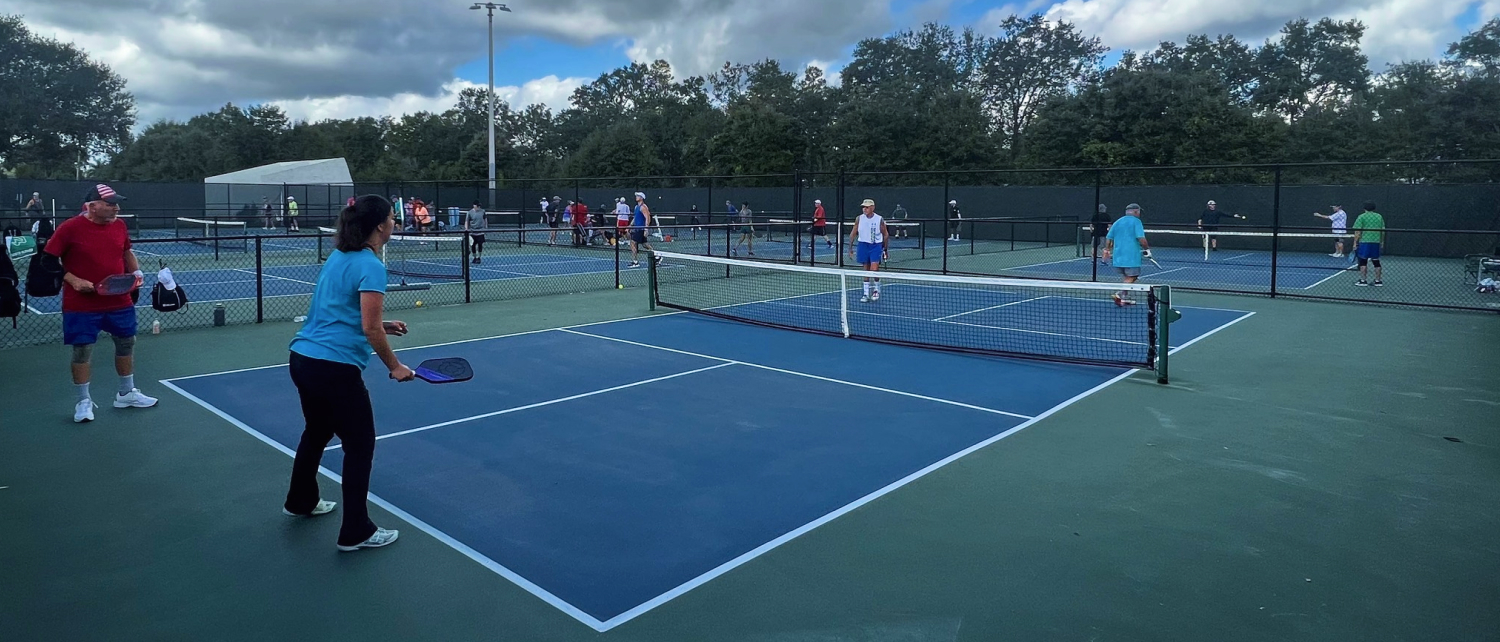
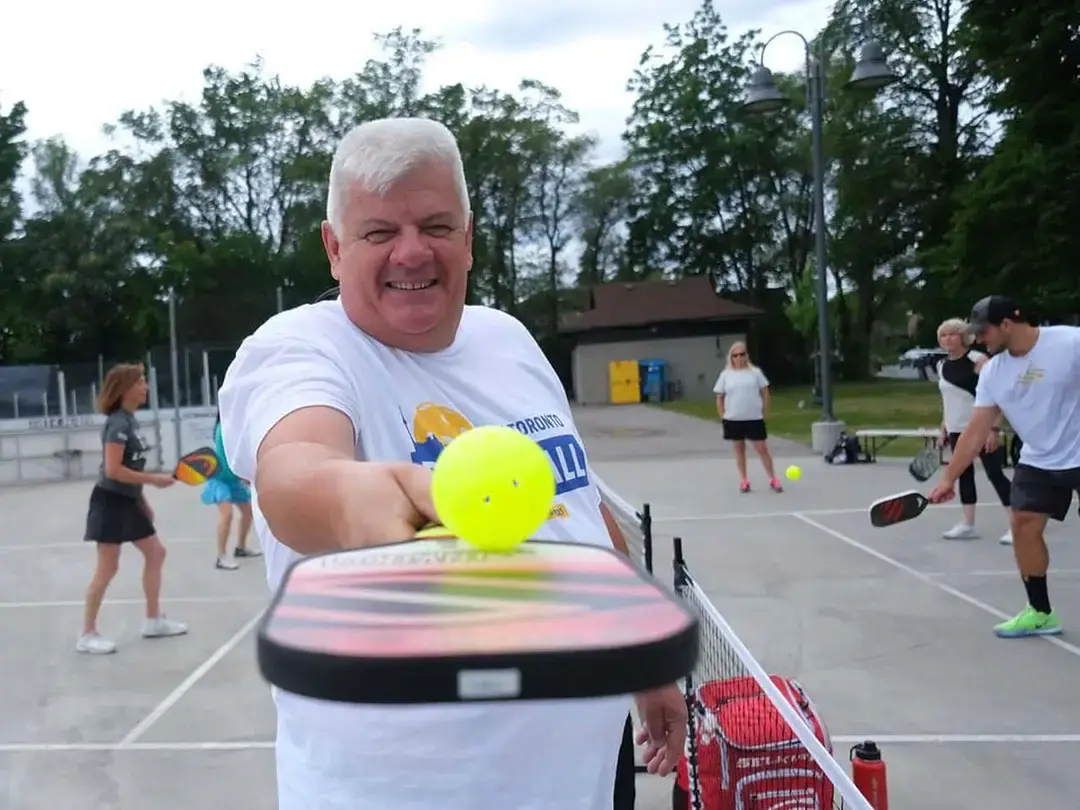
Learning pickleball in a group setting offers beginners an opportunity to develop fundamental skills, gain confidence, and experience the social benefits of one of America’s fastest-growing recreational sports. Although pickleball is relatively easy to learn, developing proper technique and understanding game strategy requires structured practice and professional guidance. Group pickleball lessons provide an environment where new players can improve their skills while learning alongside others with similar experience levels. At I&G Pickleball, we believe that effective instruction should combine individual feedback, practical drills, and realistic game situations. By approaching each session with clear goals and a willingness to learn, beginners can make meaningful progress while building a foundation for enjoyable recreational and competitive play.
Why Are Group Pickleball Lessons Beneficial for Beginners?
Group instruction combines professional coaching with opportunities to practice against different players. Unlike learning exclusively through recreational games, structured lessons introduce techniques in a logical sequence, allowing beginners to understand how individual skills contribute to overall performance.
We also learn a lot by watching other beginners in the class; we see how they play the game, and we can pick up on mistakes that we ourselves are making, practice speaking with other players, and get used to playing with balls that are hit to us at different speeds and from different distances. Playing different games also helps to improve your adaptability and reiterates the key elements of the game that we are teaching.
At I&G Pickleball, we emphasize small-group instruction because it allows players to receive meaningful coaching while benefiting from the interaction and energy of a shared learning environment. Our goal is to help participants develop sound techniques rather than simply complete drills without understanding their purpose.
Start With Clear and Realistic Learning Goals
New students to tennis often arrive at their first lesson wanting to improve every part of their game straight away. It is more productive to concentrate on the few things you want to get better at and learn how to achieve them in one session, rather than trying to learn to do lots of things.
As a beginner, you should focus on learning to serve correctly, to move around on the court, and to use all surfaces of the paddle to control the ball. Once you have mastered these basic skills, you will be able to learn more advanced techniques faster.
We begin by having students establish their own goals for development before beginning work with them. Some students desire to play in a recreational game and have goals for development on the field to feel ready for the game. Other students are looking for organized leagues and/or tournaments in which to play. As a group and individually, we work to help students reach their goals.
As a measure of progress, we track consistency, decision-making, and confidence as opposed to comparison with more experienced players.
Learn Proper Technique Before Developing Bad Habits
The biggest advantage of learning from a professional coach is receiving feedback immediately, before a player starts to rehearse inefficient movements as habits. A player who only plays casual games against other beginners can develop many very inefficient habits (such as too much wrist action, very large swings, wrong foot placement) without ever realizing how detrimental they are.
Through specific controlled exercises on the court, new Pickleball players can learn the fundamental techniques of the sport. This helps to develop the optimal position of the paddle, the point of contact, and a good balance, as well as the correct body position. A compact swing is particularly important because of the very small playing area and the quick reactions required in a game of Pickleball.
Use the proper techniques to keep a comfortable and balanced movement. Try to keep your balance, don’t stretch, and use controlled footwork while moving to the ball.
We concentrate on students making solid contact with the ball. We try to place the ball in consistent spots on the court and increase the pace of play while having students repeat all of the previous movements.
Understand the Rules and Scoring System
Pickleball is a lot of fun when played with others in group games. The rules need to be learned by new players, for example, for serving, for the 2-bounce rule, for scoring, and for the non-volley zone (NVZ) or “kitchen.”
In traditional doubles scoring, only the server’s team scores points. Each player on the serving team serves several games in a row until they lose a game of serving. For the first game of the match, the first serving team gets an extra serve, i.e., they get to serve twice instead of once.
Players learn the correct way to announce the score before a serve. Players also find out where they are going to serve from after gaining points throughout a game. These skills are learned early in the season, so players have time to work on shot selection and court positioning.
Although some recreational games and competitions are played with rally scoring, most players would expect the game to be played with scoring as stipulated in the rules for that game.
Make Every Drill an Opportunity to Improve
Most group lessons will concentrate on practicing exercises that repeatedly try to perfect a small area of skill. A complete game is a long way off for a beginner and focused practice is needed to make sure you have reliable techniques to call on.
The serving drills are intended to train the players for accurate and consistent serves. The dinking drills are performed in an educational and controlled style in order to improve the players’ touch and their paddle awareness. The Volley and third-shot drills are intended to train the players for their reaction time and for their movements from the baseline to the kitchen.
Don’t get caught up in counting how many shots you manage to hit. Focus on the purpose of the specific drill or game that you are playing. For example, in a dinking drill, you are trying to develop the ability to play shots of varying height to all parts of the court. It is not a drive to hit a shot as hard as possible.
The player who recognizes the value of a specific training drill will also recognize the applicability of that specific skill to match situations.
Develop Strong Doubles Communication and Court Positioning
The most common format of recreational pickleball is doubles played with a partner, so teaching a beginner to play pickleball with a partner is key to good instruction.
Good doubles teams communicate, move well together, and play with the right amount of space between them. As one player moves to the side of the court, the other player should move to that side as well in order to avoid a large area of court in the center.
We teach beginners some simple communication for playing with partners, for example, calls like mine, yours, and switch. This has to be taught at the appropriate time and helps to prevent a player hanging about and then having to rush back to their court during a rally.
In addition to this, constant reference should be made to court positioning, with players playing in areas of the court near to the back of the court and then moving into the transition area and finally into the kitchen line area in order to gain an advantage.
These are the same principles that can be learned in a group lesson and then applied to make ordinary recreational games more structured and more fun.
Build Confidence Through Supervised Game Play
Learning the strokes is only half the task of a beginner. He must also learn how to use these strokes within a rally against an opponent who can move, return a shot, and change pace, to name a few things.
In supervised games, players can work on their serving, on returning a serve, on their positions on court, and on their communication with their opponent within the frame of a real game. We watch what the player does and note where he or she could improve.
As well as being able to compete in tournaments, students are encouraged to try out golfing techniques during their practice rounds. You can learn a lot by attempting to play a controlled third-shot drop, for example, even if you don’t get it right at first!
Feedback on what you did well and why something did not work between points on rallies can be used by a student to make appropriate changes at subsequent points.
Benefit From Learning Alongside Other Beginners
Observing another student in your group coaching session hit shots that your group coaching instructor previously explained to your group can help clarify your own understanding of the previous explanation. Additionally, it is possible for the instructor to explain things to you that you wouldn’t pick up on in your own practice.
In group lessons, beginners get to know different kinds of players, movements, as well as shots. On recreational open court play, most players encounter all kinds of partners and opponents.
However, there is more to sports than the formal environment of training sessions. Players often make friends with each other and even set up voluntary training sessions outside of their scheduled lessons to help each other improve.
Pickleball is an activity that adults can use to get exercise while meeting new people of all ages. Start by taking a beginner pickleball clinic.
Choose the Right Group Size and Skill Level
Not every group lesson is equal. The number of students, prior knowledge, and teacher presence strongly influence the learning situation.
Large mixed experience groups can be problematic for beginners to gain quality practice time. Very large groups also provide little opportunity for individual feedback compared to a smaller group.
We recommend lessons with players of similar ability. Beginners will benefit from playing with other beginners learning the same fundamentals. Developing players benefit from more advanced drills and games to work on overall strategy.
The “3 and Me” coaching sessions are set up so that 3 players can work with 1 coach in small groups of 3 & 1. There is a combination of personal coaching, partner drills, and simulated doubles situations.
Practice Between Lessons to Reinforce New Skills
For a beginner, formal lessons need to be reinforced by consistent short practice sessions in order to consolidate learning of serving, controlled dinking, and relevant footwork.
It is better to choose one or two techniques for each lesson and to practice them between sessions. Then measurable progress is always achievable.
Players should also pay attention to physical preparation. Appropriate court shoes, a comfortable paddle, regular hydration, and sufficient recovery time contribute to a more enjoyable learning experience.
Further application of newly acquired skills in recreational games. Players apply their skills in further matches as their skills and experience improve. In these games, players can also play against other opponents to get used to matches against other players.
Frequently Asked Questions
Are group pickleball lessons suitable for complete beginners?
Yes. The Beginner group lessons introduce students to the basic rules of the game, scoring, serving, basic strokes, court position, and some basic tactics to play points. The aim of the lessons is to give beginners a feeling of competence in the shortest time possible to then move on to more advanced skills.
How many group pickleball lessons does a beginner need?
The number of tennis sessions a person needs to reach their athletic goals can vary depending on a number of factors, including prior athletic experience, how frequently sessions are held, and the person’s objectives for participating in tennis. There are beginners who can reach the level of a basic recreational player within a few sessions of instruction. Other recreational players need continued practice with a coach to improve aspects of their game, including consistency and strategy.
What should I bring to my first pickleball group lesson?
It’s recommended that athletes attend sessions in suitable athletic apparel and bring their own court shoes. Athletes should also bring water and a suitable-sized paddle for their playing ability. Please check prior to attending a session for availability of equipment and for any special facility requirements.
Does I&G Pickleball offer small-group coaching for friends or family members?
Yes. The “3 and Me” program has 3 players per session with Coach Igor. Private and semi-private coaching are also available for even more focused coaching with your player.
Start Improving Your Pickleball Skills With Professional Coaching
Learning pickleball becomes more rewarding when beginners receive clear instruction, regular feedback, and opportunities to practice in a supportive environment. Group coaching helps players establish proper fundamentals, develop confidence, improve teamwork, and prepare for recreational competition.
Lessons of Pickleball at I&G Pickleball are fun for everyone, whether new to the sport or a seasoned player, and help to improve your game so you can become a better doubles player and more active physically and socially.
We invite you to join our beginner group lessons, experience personalized instruction from Coach Igor, and discover how structured practice can improve your game. Contact us today to discuss your experience level, explore available coaching options, and schedule your next session at I&G Pickleball.
Image credit: Wallpapers.com
