




Being active on the pickleball court means more than practicing serves, dinks, and volleys. The foods and drinks we consume before and after a game can affect our energy, recovery, focus, and stamina during the game. Whether you are into recreational games, competitive tournaments, or regular pickleball lessons, good nutrition helps you maintain consistent performance while supporting your body’s recovery from physical activity. We encourage players of all ages and abilities to view healthy eating as a key component in improving their overall game and enjoying every opportunity to play.
Why Nutrition Matters for Pickleball Players
Pickleball is a sport of short bursts of movement, with long periods of concentration. Players need to speed up, slow down, change direction, and react in seconds. This places demands on both the muscles and the brain. Good nutrition gives you the energy to make those movements and also helps you coordinate and decide.
A balanced diet also helps to keep energy levels high during a match. Choosing nutrient-rich foods instead of sugary snacks that can cause energy spikes and crashes can help players feel more comfortable and focused from the first serve to the last point.
Choosing the Right Foods Before Playing
There are hours before a pickleball session when the body can be prepared for activity. Meals with complex carbohydrates, lean protein, and healthy fats provide a steady source of energy without that feeling of heaviness.
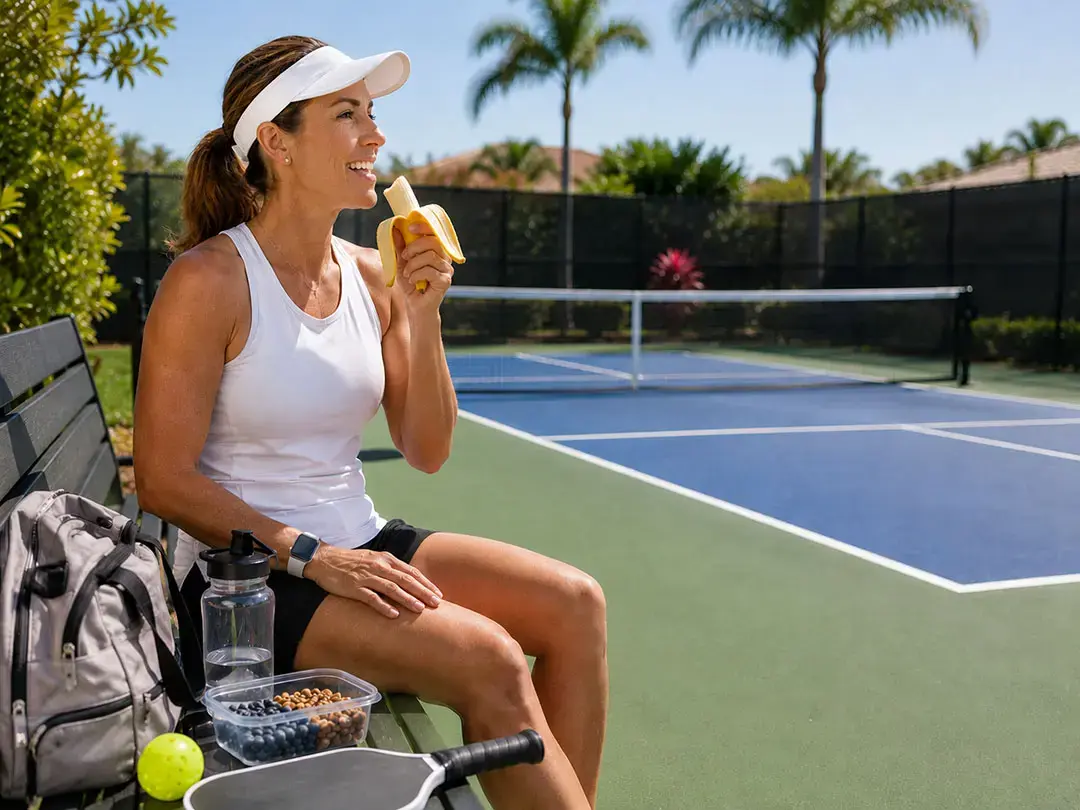
Suitable options include oatmeal and fruit, whole-grain toast and eggs, yogurt and berries, or grilled chicken and brown rice a few hours before the game. If you’re short on time, a banana, apple, or small handful of nuts is a good snack before you step onto the court.
If you eat a lot just before you play, you might feel uncomfortable moving around. Players feel lighter and still have energy for their session by giving the body enough time to digest.
Staying Hydrated Throughout the Day
Hydration is often overlooked in favor of nutrition, but it is just as important to athletic performance. A slight loss of body water can impair reaction time, endurance, and concentration.
That’s why we encourage players to drink water throughout the day, not just when they feel thirsty. If you are practicing for a long time, outside, or if it is hot, drinks with electrolytes can help replace the minerals you lose in sweat. Staying hydrated before, during, and after play helps with recovery and also helps players perform more comfortably.
Supporting Recovery After Every Match
Recovery begins a little after leaving the court. While eating protein helps repair muscles, the body also benefits from replacing the carbohydrates used for energy.
Post-exercise, simple meals like grilled fish with vegetables, turkey on whole-grain bread, or a fruit and Greek yogurt smoothie will provide a good balance of nutrients. When combined with proper hydration, these foods allow the body to recover more effectively before the next practice or game.
For many players who play more than one session per week, healthy recovery habits can help to mitigate fatigue and enable them to maintain consistent performance over time.
Vitamins and Nutrients That Support Active Players
Every player’s nutritional needs are different, but there are some nutrients that support active lifestyles. Protein helps sustain and rebuild muscle, while complex carbs supply a steady stream of energy for activity. Healthy fats are beneficial for your overall health, and colorful fruits and vegetables supply vitamins, minerals, and antioxidants to help your body recover from physical activity.
We encourage players to build balanced meals with whole foods whenever possible instead of only focusing on supplements. Players may also want to consult a health care provider or a registered dietitian regarding their individual dietary needs.
Nutrition Habits That Improve Consistency
Building healthy eating habits does not require dramatic changes. Small adjustments often produce meaningful improvements over time. Planning meals before busy practice days, keeping healthy snacks available, and drinking water regularly all contribute to better preparation for the court.
We often remind our pickleball students that consistency extends beyond practicing skills. The same discipline used during pickleball lessons can also apply to daily nutrition, hydration, and recovery habits. These routines support both performance and overall wellness.
Combining Smart Nutrition With Quality Instruction
Nutrition cannot substitute for good technique, but good instruction improves with nutrition. Players who fuel their bodies correctly often feel more ready to focus during drills, learn new skills, and have energy throughout long practice sessions.
Combining healthy eating with professional coaching provides a great foundation for continued improvement, whether you are learning the basics or perfecting advanced strategies. Every good habit equals more confidence and a better time on the court.
Frequently Asked Questions
What should I eat before a pickleball lesson?
A balanced meal containing complex carbohydrates and lean protein two to three hours before your lesson provides steady energy. If you need a quick snack, fruit or yogurt are good choices.
Is water enough during pickleball matches?
For shorter sessions, water is often sufficient. During extended play or hot weather, electrolyte beverages may help replace minerals lost through perspiration.
What foods help recovery after pickleball?
Meals that combine lean protein with healthy carbohydrates, such as grilled chicken with rice or Greek yogurt with fruit, help replenish energy while supporting muscle recovery.
Can good nutrition improve pickleball performance?
Yes. Proper nutrition supports energy, focus, endurance, recovery, and overall physical performance, allowing players to practice and compete more consistently.
Healthy nutrition and quality instruction work together to help every player perform at their best. Whether you are beginning the game or refining advanced skills, we invite you to join our pickleball lessons and experience how proper coaching and healthy habits can improve your performance both on and off the court. Contact us today to get started.
