



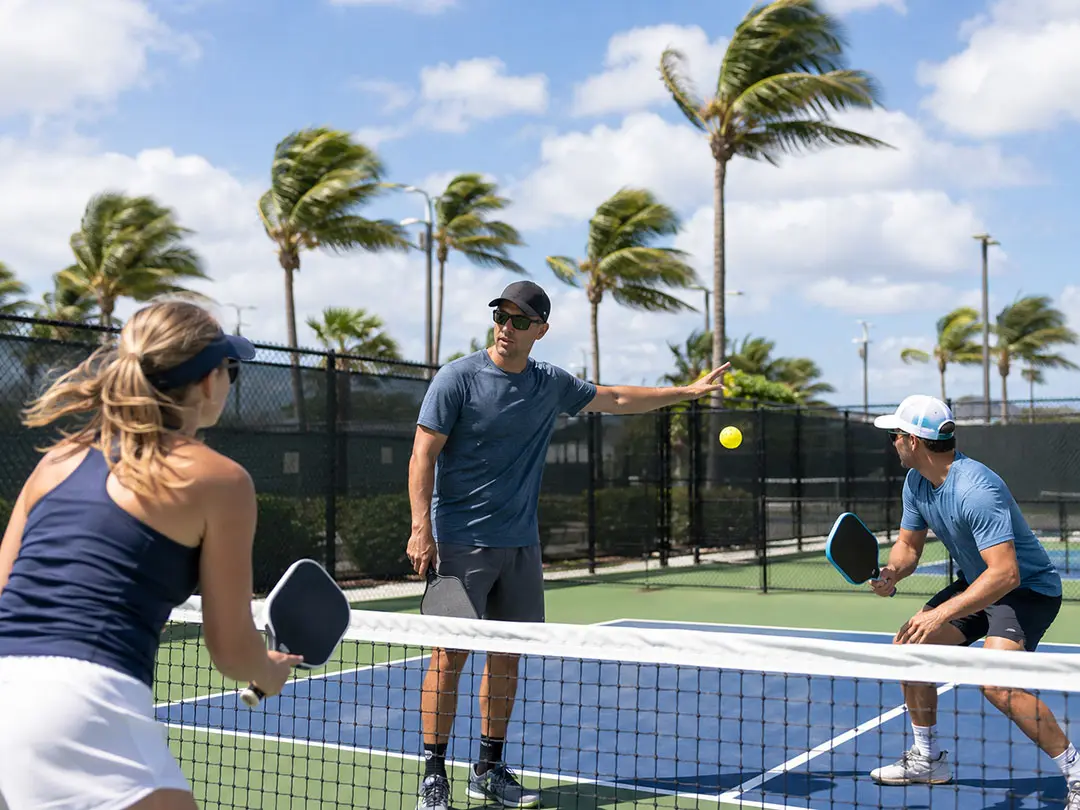
There are many benefits to playing pickleball outdoors, such as fresh air, sunshine, and the chance to play in nature. But occasionally the weather can pose a unique challenge for players on the court. Wind is one of the most common elements players face. It can affect ball flight, shot selection, positioning, and overall strategy. Learning to adapt to wind can help players stay competitive and confident no matter what the forecast calls for.
At I&G Pickleball, we work with many outdoor players and provide training. Knowing how the wind will affect the game and making practical adjustments can help improve consistency and decision-making in tough playing conditions.
Understanding How Wind Changes the Game
Many players underestimate how wind affects pickleball. Because the pickleball is light and perforated, even a moderate wind can affect its trajectory. Normally straightforward shots inside the court may drift, come up short, or wander sideways unexpectedly.
The effects are most noticeable on serves, returns, lobs, and overheads, say players. If the wind blows with the shot, it helps the ball along; if against, it slows it down. Crosswinds can create movement, making accurate placement more difficult.
The successful players don’t fight the conditions but rather adjust their expectations and strategy to account for the wind’s influence.
Why Simplicity Often Wins
When conditions become challenging, simpler shot selection is often the better choice. Many players opt for more difficult or attacking shots, and there really isn’t much room for error. Those margins get even narrower in windy conditions.
We want players to focus on high-percentage shots that emphasize consistency and control. Hitting at a moderate pace and aiming at larger target areas can help reduce unforced errors. Players who are patient and avoid forcing difficult shots often have an advantage over opponents who get frustrated by the weather.
A key part of successful outdoor play is risk management.
Adjusting Your Serve and Return
Serve and return is the foundation of every point. Shots often have to be changed in windy conditions.
If you are serving into the wind, try to hit the ball with a bit more pace or height to help it go where you want it to. When sailing long distances with the wind at your back, you may need to reduce your power.
Returns should be similarly adjusted. Players must also consider how the wind affects the ball’s trajectory and adjust their paddle angle and swing speed accordingly. With these tweaks in practice, players can feel more confident playing in matches in different weather conditions.
Positioning Matters More Than Ever
The wind will change the ball’s trajectory, so positioning on the court is even more important. The strong wind often causes unexpected bounces and flights, requiring faster reactions and better anticipation.
Athletes with well-rounded skill sets are usually better equipped to adapt to sudden changes. Lightness on your feet and minimal movement before the ball crosses the net can improve your reaction time.
Communication is also especially useful in doubles play. Partners who discuss wind conditions and cover the court as a team are often better able to handle difficult situations than teams that do not adapt as a unit.
Learning to Use the Wind Strategically
As players become more experienced, they learn that wind is not a barrier but an ally. Knowing the wind direction helps players make smart decisions throughout a match.
For instance, hitting deeper with the wind can push opponents further behind the baseline. Playing into the wind allows you to hit safer shots with more net clearance. This creates opportunities for players to apply pressure while limiting their mistakes.
We don’t want to screen out the effects of wind but want to make better decisions about the conditions at each point.
Practicing in Different Weather Conditions
Many recreational players won’t play outside if it’s windy. This is totally understandable, but the more you practice in less-than-perfect conditions, the faster you will improve.
Wind tests players’ concentration, footwork, adaptability, and shot selection. These skills tend to translate to calm conditions as well. Players who have played in tough weather often become more versatile competitors overall.
When you work on your game in windy practice sessions, you gain confidence and learn what works best for you and your style of play.
Developing a Strong Mental Approach
The wind affects every player on the court the same way. Often, the most significant difference between the struggling player and the successful player is their mindset.
Bad bounces and unexpected ball movement can frustrate players and ultimately lead to a loss of focus and bad decisions. They are usually consistent throughout the match if they accept the conditions and stay flexible.
Mental discipline is a big part of outdoor pickleball. Accepting that some shots will not go as planned allows players to remain calm and continue to execute their game plan.
Frequently Asked Questions
How does wind affect pickleball strategy?
Wind influences ball flight, shot placement, and court positioning. Players often benefit from using simpler, higher percentage shots and making strategic adjustments based on wind direction.
Should I change my serve when playing in windy conditions?
Yes. Wind can affect both speed and trajectory. Players often need to adjust their power, height, and placement depending on whether they are serving into or with the wind.
Is it beneficial to practice pickleball in windy weather?
Practicing in windy conditions helps improve adaptability, shot control, footwork, and decision-making. These skills can improve overall performance in all playing conditions.
Can pickleball lessons help me play better in outdoor conditions?
Yes. Professional instruction can help players develop strategies and techniques for handling wind, sun, court positioning, and other outdoor variables more effectively.Windy conditions are part of outdoor pickleball, but they do not have to negatively impact your performance. With the right adjustments, players can improve consistency, make smarter decisions, and remain competitive even when the weather is less than ideal. At I&G Pickleball, we help players develop the skills and confidence needed to succeed in various playing environments. Contact us today to learn more about our lessons, clinics, and training programs designed to elevate every aspect of your game.
Picture Source: AI-generated
