



Yes. Your paddle matters more than most beginners realize, and even experienced players leave points on the court by using the wrong equipment for their style of play. The paddle is the only piece of equipment that actually touches the ball, so its shape, weight, thickness, and surface texture all directly affect what happens when you make contact. This is not about buying the most expensive paddle. It is about understanding what different paddles do and choosing one that works with your game, not against it.
What Pro Players Say About Paddle Selection
Top professional players are very specific about their paddle choices, and they change equipment when their game strategy changes. Ben Johns, widely considered the best player in the world, has spoken about how paddle thickness affects touch and control at the kitchen line. Anna Leigh Waters focuses on a paddle that gives her consistent spin generation because her game relies on aggressive third-shot drops and aggressive drives. Tyson McGuffin has talked about preferring paddles with a slightly softer feel so he can reset with more confidence during rapid exchanges at the net.
The common theme from pros is that they test paddles against their actual weaknesses. If your dink game is inconsistent, you need better touch and feel. If you are losing rallies because your shots lack pace, you may need a paddle that adds power. The pros do not just pick a paddle because it looks good. They pick it because it solves a specific problem in their game.
Paddle Shape: How It Changes What You Can Do
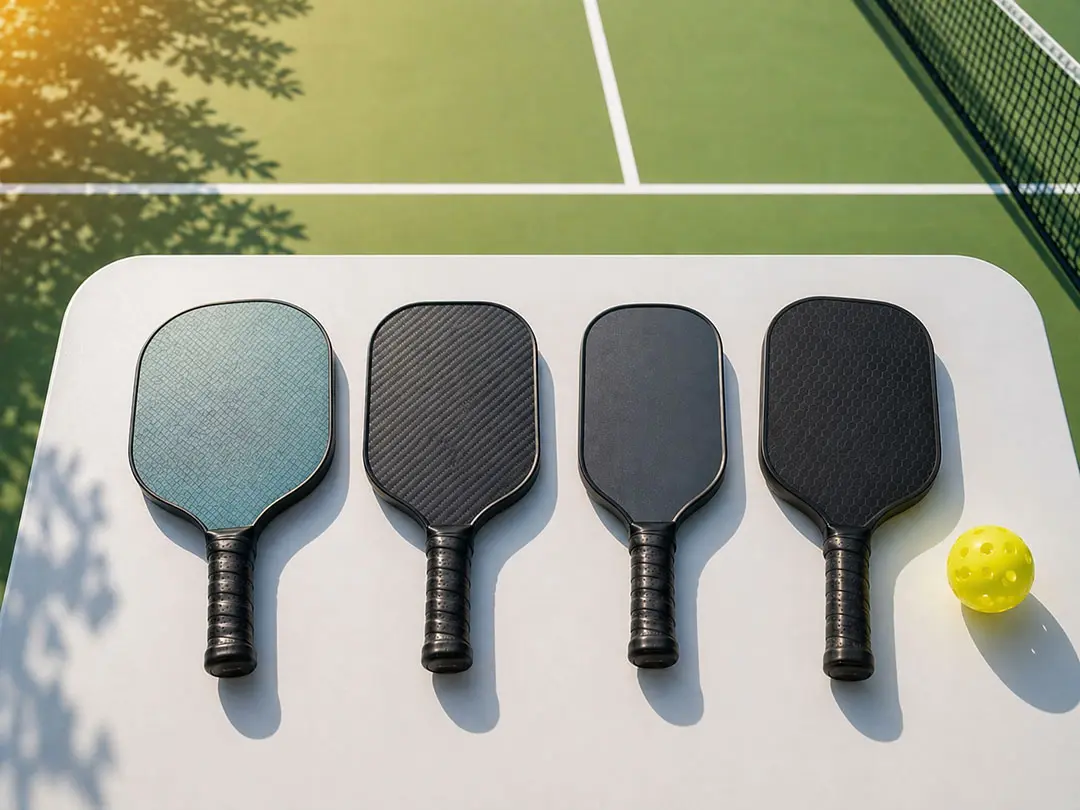
Pickleball paddles come in three basic shapes: standard, elongated, and widebody. Each one changes your reach, your sweet spot size, and the amount of control you have.
Standard-shaped paddles have a balanced feel. The sweet spot is positioned in a comfortable middle zone, providing excellent maneuverability at the kitchen line. This shape works well for beginners and intermediate players who are still developing their stroke mechanics. A consistent sweet spot gives you more forgiveness on off-center hits.
Elongated paddles are longer and narrower. They give you more reach on wide balls and they can add extra leverage for spin and power. The tradeoff is a smaller sweet spot and slightly slower reaction time at the net. Advanced players who already have solid mechanics tend to prefer this shape because they can place the ball consistently and use the extra reach to their advantage.
Widebody paddles have a large hitting surface. They are forgiving and give beginners more confidence because more of the paddle face can make solid contact. Players just getting started with pickleball lessons in New Port Richey, Brooksville, Lutz, or North Tampa often find that a widebody paddle helps them build consistency faster.
Paddle Weight: More Than Just Comfort
Paddle weight is usually divided into three categories: lightweight (under 7.3 oz), midweight (7.3 to 8.3 oz), and heavy (over 8.3 oz). This might seem like a small difference, but you will feel it after an hour of play.
Lighter paddles give you faster hands. If your game relies on quick resets at the kitchen, soft hands during dink rallies, and rapid reactions during speed-ups, a lighter paddle helps you move faster without fighting the weight. Many women players and players over 50 prefer lighter paddles because they reduce arm fatigue during long sessions.
Heavier paddles add momentum to your shots. You do not have to swing as hard to get power on your drives and serves. Some players with arm or elbow sensitivity find heavier paddles more comfortable because they absorb vibration rather than transferring it to the wrist and elbow. That said, a heavy paddle can slow your hands down at the net, which is where most points are decided.
For most recreational players just starting out with pickleball lessons, a midweight paddle is a safe choice. It gives you enough power without slowing your hands down at the kitchen line.
Paddle Thickness: The Feature Most Players Overlook
Core thickness is a key paddle spec that is often overlooked. Thicker cores (16mm and above) produce a softer feel with more dwell time, meaning the ball stays on the paddle face slightly longer during contact. That extra dwell time gives you better control and spin potential, but it does reduce the pop on power shots.
Thinner cores (13mm and below) are livelier. The ball comes off faster, which helps players who rely on pace and flat drives. The tradeoff is less touch and feel at the kitchen. Advanced players sometimes choose thinner cores specifically for singles play, where power matters more than soft touch.
If you are working on your dink game or your third shot drop during pickleball lessons, a thicker core paddle will give you more feedback and control. If you are a stronger player who wants to drive more aggressively, a thinner core may open up your offense.
Paddle Surface: Spin, Grit, and Texture
The surface of a paddle determines how much friction it generates when it contacts the ball, which directly controls spin. Most modern paddles use either fiberglass or carbon fiber as the face material, and some manufacturers add textured coatings on top.
Fiberglass surfaces have a slight flex. They create a trampoline effect that adds power, which makes them popular with beginners and players who want more pace without extra effort. The spin potential is moderate.
Carbon fiber surfaces are stiffer. They transfer energy more directly and usually have more texture built into the weave, which creates better grip on the ball for spin shots. If you are working on developing a heavy topspin third-shot drop or a slice backhand, a carbon-fiber paddle gives you more to work with. Advanced players overwhelmingly prefer carbon fiber for this reason.
Raw carbon fiber, a newer option in the market, takes the texture even further. Some paddles now have a rougher grit surface that can dramatically increase spin rates. Be aware that raw carbon surfaces do wear down over time and their spin performance decreases with use.
Matching Paddle to Player Level
For beginners just learning the game through pickleball lessons in New Port Richey, Brooksville, Lutz, or North Tampa, the priority should be a forgiving paddle. A widebody or standard shape with a thicker core, midweight feel, and fiberglass face gives you the most room to develop your strokes without fighting your equipment. Spend your energy on footwork, positioning, and the basics. Your paddle just needs to stay out of the way.
For intermediate players with a 3.0 to 3.5 rating, start thinking about what part of your game needs the most improvement. If you are inconsistent at the kitchen, go with a thicker core for control. Try a carbon fiber face with a thinner core if your drives aren’t passing through. This is also the level where elongated shapes start to make sense.
For advanced players at 4.0 and above, the paddle becomes a precision tool. At this level, small differences in grit, weight distribution, and core thickness actually show up in how your shots behave. Many advanced players use different paddles for singles versus doubles because the demands of each format are different.
The Bottom Line on Paddle Selection
A paddle will not fix bad mechanics. That is what pickleball lessons are for. But the right paddle can make good mechanics easier to repeat consistently. If you are using a heavy, thin paddle and your strength is soft hands at the kitchen, you are working against yourself. If you are using a lightweight fiberglass paddle but your game depends on aggressive drives, you are leaving pace on the table.
At I&G Pickleball, Coach Igor works with players across New Port Richey, Brooksville, Lutz, and North Tampa. Part of every lesson is understanding how your equipment fits your current skill level and playing goals. Bring your paddle so we can see if it’s helping or hurting your shots.
Book a Pickleball Lesson with Coach Igor
Whether you are just picking up a paddle for the first time or you are a competitive player looking to sharpen your game, Coach Igor at I&G Pickleball can help. Lessons are available for players across New Port Richey, Brooksville, Lutz, and North Tampa, FL.
Visit igpickleball.com to book your lesson today.
Call or text to schedule: Available on the website at igpickleball.com
Frequently Asked Questions
Does a more expensive paddle always mean a better game?
Not necessarily. Price reflects materials and brand reputation, but the right paddle depends entirely on your skill level and playing style. A beginner using a pro-level, elongated carbon-fiber paddle will likely struggle more, not less. Start with a forgiving midweight paddle and upgrade once your mechanics are consistent.
How do I know if my paddle is holding my game back?
If your dinks feel inconsistent, your drives lack pace, or your arm fatigues quickly during play, your paddle may not match your game. Coach Igor evaluates equipment as part of lessons in New Port Richey, Brooksville, Lutz, and North Tampa. Bring your current paddle and get an honest assessment.
Can the same paddle work for both singles and doubles?
It can, but it is not ideal. Doubles rewards soft touch and quick hands at the kitchen, which favors lighter, thicker-core paddles. Singles rewards power and reach, which suits elongated, thinner-core paddles better. If you play both formats regularly, a midweight standard shape is the best compromise.
How often should I replace my pickleball paddle?
Most paddles last one to three years, depending on how often you play. Signs it is time for a new one include a dead spot on the face, surface grit wearing smooth, a cracked edge guard, or a noticeable change in how the ball comes off the paddle. Players in areas like Brooksville and Lutz who play outdoors in Florida heat may see faster surface wear than indoor players.
Picture Source: AI-generated
