



Is finding a pickleball partner who can help improve your game at your local court one of your unanswered questions? Pickleball is quickly becoming one of the most popular sports in the US. Played by millions of Americans of all ages, it combines the best elements of tennis, badminton, and table tennis to create a fast and fun sport that is easy to pick up but challenging to master. While your own skill with a pickleball paddle is very important, your partner’s skill at the kitchen line can have as big an impact on your game, for good or bad, as you do. In this article, we will explore ways to find a good pickleball doubles partner and then test them out. Once you find a good partner or two, we will also cover ways to keep them on your court.
Why the Right Partner Matters in Pickleball Doubles
Doubles is a team game, plain and simple. When two players trust each other, they cover the court more smoothly, they poach at the right moment, and they bounce back after losing a point. When they don’t trust each other, you get missed dinks, silly collisions, and a lot of finger-pointing. The right partner keeps you calm under pressure and pushes you to sharpen the weak parts of your game. So learning how to find a pickleball partner isn’t just about filling the other side of the court. It is about building chemistry that shows up in the score.
Step 1 — Assess Skill Level and Compatibility
When choosing a partner, first consider your respective skill levels. Look for someone whose skill set is similar to your own and/or complements your own abilities. Watch your potential partner move around the court, hit third shot drops, and see how they hold up during long dink rallies. You can get a good sense of someone’s skill level by looking at their DUPR or club rating, but games are the best way to get a true read on someone. In addition to skill level, pay attention to your partner’s court awareness. Do they know when to switch sides of the court? Do they call balls out confidently? These are small things that count quickly.
Matching Beginners vs. Experienced Players
If you are a complete newbie to the sport of pickleball, then playing with someone of a similar ability to yourself can be great fun. Not only can you learn the game together, but you can also make mistakes together and have a good laugh about them. If you are an experienced player looking to improve at the sport, then look for a playing partner who will challenge you. Even if you lose a few games along the way, your game will improve. The important thing is to be honest with yourself as to what you are looking for at the present time: fun, improvement at the game, or tournament play?
Where to Meet Potential Partners
You’ll meet plenty of players at local open play sessions. Players tend to rotate between games, so you can expect to meet dozens of other players at sessions held at community rec centers, pickleball clubs, at church or neighborhood courts, and more. Also consider joining a local league or even a small tournament to see how others play when points are on the line. Finally, look for online groups in your town, including Facebook pages and apps where “looking for a partner” is a frequent post. The more you go out and play, the faster you’ll find a partner.
Step 2 — Prioritize Effective Communication
Talent gets you so far, but communication wins games. Someone who communicates well on court (positive and clear) is way more valuable than someone who hits harder but is a grump after every error. That communication comes in two forms: on court and off.
On-Court Communication
Your partner should call the ball and yell out “mine” or “yours” and you can then determine if the shot is going out. On-court talk can also let your partner know where you are on the court and tell them to “switch” or “stay” to prevent the two of you from crashing into each other. Giving your partner a heads-up before a serve or a stack is also very important and can be done in a matter of seconds. It may seem like a small part of the game, but it can save a ton of points.
Off-Court Communication
When we’re not playing games, we should be able to discuss our goals, strengths, and weaknesses with our partners. Can your partner give you feedback without feeling hurt or offended? Can you give your partner feedback without feeling hurt or offended? Treat mistakes as team failures, not as personal failures. Take a minute or so after each game to discuss what worked and what didn’t work for both of you. This type of discussion will help build trust and ensure that both of you are getting better week after week.
Step 3 — Find a Compatible Playing Style
Even two very good players can form a bad team because of different playing styles. The issues that need to be discussed are tempo of the game, shot selection, and risk-taking. You both have to find a way to blend your styles in order to cover each other’s weaknesses.
Aggressive vs. Defensive Pairings
Aggressive bangers are greatly improved by having a teammate that is defensive-minded and able to reset the side of the court to receive returns. On the other hand, slow, soft-play players are greatly improved by having a finisher at the net. Two very aggressive players often make errors, and two very passive players never put the ball away. It’s often the case that the two players with very different styles of play do better than two with identical styles.
Practice Matches to Test Chemistry
You really won’t know if you click with someone until you play a game or two together. Have a practice match or two of drilling before signing up for a league or tournament. Watch how you two recover from a loss. Do you lift each other up, or does things get quiet/tense between you two? Chemistry turns up under pressure, so create some and see how you two do. If you’re still having fun even when you lose, then you two are playing great together.
Step 4 — Align on Commitment and Availability
A lot of promising tennis partners fail after a short time because one of them wants to play three times a week and the other only once a month. It is very important to agree on the frequency and duration of tennis sessions as well as on other goals like entering tennis tournaments. A good tennis partner is worth its weight in gold. Someone who shows up for sessions on time is more valuable than any tennis coaching. Also, having a tennis court at home or a local club makes it a lot easier to plan and make tennis practice a habit.
Step 5 — Gear Up Together: Recommended Paddle for Partners
After you and your partner have reached a certain level of play, matching or upgrading your gear can help you to play at a more consistent level. A great option to look at for current gear is the JOOLA Ben Johns Perseus 3 paddle. This is a modern, tournament-ready paddle with a thick carbon face that will give you all the control you need for the soft dinking of the game as well as the power you need for the putaways. Other great options for current gear are the Selkirk Vanguard Power Air or other Selkirk models. Try to choose a paddle that fits your style of play and that you play best with, as the cheapest option is not always the best. A quality paddle will help you trust your shots when it really matters.
Practice Better Together on a Quality Court
Nothing builds partnership chemistry faster than regular practice on a good surface. Cracked or slippery courts make it hard to trust your footing, and that hurts your progress. If you and your partner want a reliable place to drill, a professionally built court is a game-changer. IG Pickleball handles pickleball court construction for clubs, communities, and private homeowners who want a proper place to play. A dedicated court means no more waiting in line at the busy public spots.
Already have a court that has seen better days? Our team also offers court resurfacing and repair to bring your surface back to life. A fresh, smooth court gives you and your partner the safe, consistent footing you need to sharpen your dinks, drives, and third shot drops. When your practice space feels great, you show up more often, and that is exactly how strong partnerships are built.
FAQ
How do I find a pickleball partner near me?
Play open court at local community centers, clubs, and neighborhood courts. These are facilities where there is a high volume of players, and they play multiple matches per session. Join local leagues, small tournaments, and even a town Facebook group where people post up to look for playing partners. The more you show up to sessions, the greater the chance you’ll find someone of a suitable ability and with a suitable schedule to play with on a regular basis.
Should my partner have the same skill level?
It depends on what you are looking for in a learning experience. If you are looking for something fun and easy to learn, then a similar level player would be good for you. However, if you are looking to improve quickly, then a player slightly above you will challenge you. The most important thing is that you have different playing styles and that you enjoy playing with each other.
How important is communication in doubles?
This is huge! On court, calling the ball, shouting “mine” or “yours,” and discussing tactics around points helps to avoid accidents and loss of points. Honest feedback on both players’ strengths and weaknesses helps to keep the positive partnership and enables both to improve at about the same rate.
How often should partners practice together?
There is no perfect number of training sessions, but consistency over intensity is far more important. Even a single session a week with focus can create good chemistry quickly, and agreements can be reached as to a frequency and time that is suitable for both parties. It is also important to have a reliable local training court or home gym to train at.
Ready to Play? Contact IG Pickleball
Finding a great pickleball partner takes a little effort, but the payoff is worth it. Look for the right skill match, strong communication, a complementary playing style, and shared commitment, and you will build a team that keeps getting better. And when you are ready for a dedicated place to practice, IG Pickleball is your local resource for building or renewing a court that fits your game. Contact IG Pickleball today to discuss court construction and resurfacing so you and your partner always have a great place to play.
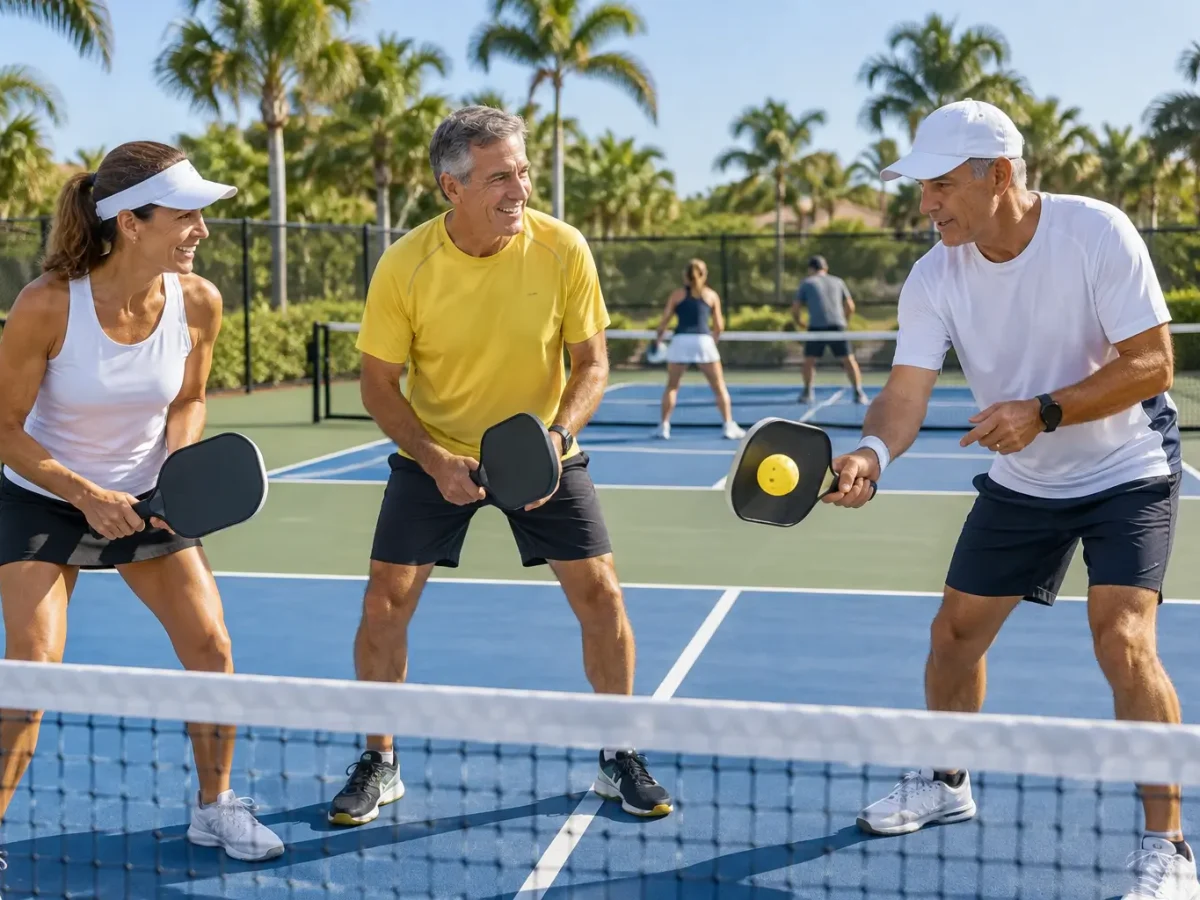
Illustration created with AI
