



If you love pickleball, what you eat matters just as much as how you swing your paddle. The right healthy food and pickleball sport habits can give you more energy on the court, faster recovery after a long rally, and less of that heavy, sluggish feeling that comes from eating too much garbage food. This is true whether you’re a senior player over 55 or a young kid just learning to serve. In this guide, we’ll talk about how cutting back on processed junk helps you play better, and how easy it really is to make smart swaps that stick.
Why Nutrition Matters in Pickleball
Pickleball may look easy from the sidelines, but anyone who has played a few games knows it works your whole body. Quick side steps, fast reactions, and long rallies all burn fuel. The food you eat is that fuel. Eat clean, and you feel light and quick. Eat too much processed food, and you feel slow and tired by the third game.
Good nutrition also helps your joints, your heart, and your focus. For players who want to spend more time on the court and less time worn out on the bench, food is one of the biggest and most overlooked tools.
How Processed Food Slows Down Athletes on the Court
Ultra-processed snacks are packed with sugar, salt, and refined flour. They give you a quick spike of energy and then a hard crash. That crash usually hits right when you need to focus most. These foods also cause more inflammation, which means sore knees and stiff shoulders that take longer to bounce back after play. Cutting the junk helps your body recover faster so you can get back on the court sooner.
What Counts as ‘Junk’ or Ultra-Processed Food?
People throw around the word junk food, but what does it really mean? Ultra-processed food is anything made mostly in a factory with long ingredient lists you can’t pronounce. Think chips, soda, candy, packaged pastries, and most fast food. These items are designed to taste good and make you want more, but they don’t provide your body with much of what it needs to move well.
Common Culprits Hiding in Everyday Snacks
Some foods look healthy but really aren’t. Watch out for these sneaky ones:
- Sports drinks loaded with added sugar
- Flavored yogurts with more sugar than a candy bar
- Granola bars that are basically cookies
- White bread and packaged muffins
- Fruit juices with no real fruit
Healthy Eating for Pickleball Players Over 55
Pickleball is huge with the 55+ crowd, and for good reason. It’s fun, social, and easy on the body compared to other sports. But as we get older, our bodies need a little extra care through food. Eating clean helps older players keep their strength, protect their bones, and stay sharp on the court for years to come.
Protein, Bone Health, and Recovery for Senior Athletes
After 55, muscle can slip away faster if you don’t feed it. Protein is your friend. Eggs, fish, chicken, beans, and Greek yogurt all help build and keep muscle. Calcium and vitamin D from leafy greens, dairy, and a little sunshine keep bones strong so a slip on the court doesn’t turn into a serious injury. Drinking enough water and eating colorful veggies help sore joints recover more quickly, too.
Simple Whole-Food Swaps for Older Players
You don’t have to change everything overnight. Try swapping soda for lemon water, chips for a handful of almonds, and white toast for oatmeal with berries. These small changes add up fast. Pair better eating with regular play through our lessons and coaching programs, and you’ll feel the difference in just a few weeks.
Fueling Young Pickleball Players (Ages 8–12)
Kids are always on the move, and young pickleball players need good fuel to grow strong and play hard. The tricky part is that kids love sugary snacks and processed treats. The good news is that habits built at this age tend to last a lifetime.
Building Healthy Habits Early
Kids copy what they see. When parents eat fruits, veggies, and whole foods, kids follow along. Get them involved in picking snacks and making simple meals. When a child feels like they helped, they are way more likely to eat it. Teach them that food is fuel that makes them run faster and hit harder on the court.
Better-For-You Snacks Kids Actually Enjoy
Healthy doesn’t have to mean boring. Try these kid-approved options:
- Apple slices with peanut butter
- Cheese sticks and whole grain crackers
- Frozen grapes or banana bites
- Homemade trail mix with nuts and a few dark chocolate chips
- Smoothies made with real fruit and yogurt
Pre-Game, During-Game, and Post-Game Nutrition
Timing your food helps you play your best. Before a game, eat a light meal with carbs and a little protein about an hour or two ahead. Think oatmeal, a banana with peanut butter, or a turkey sandwich on whole grain bread. This gives steady energy without weighing you down.
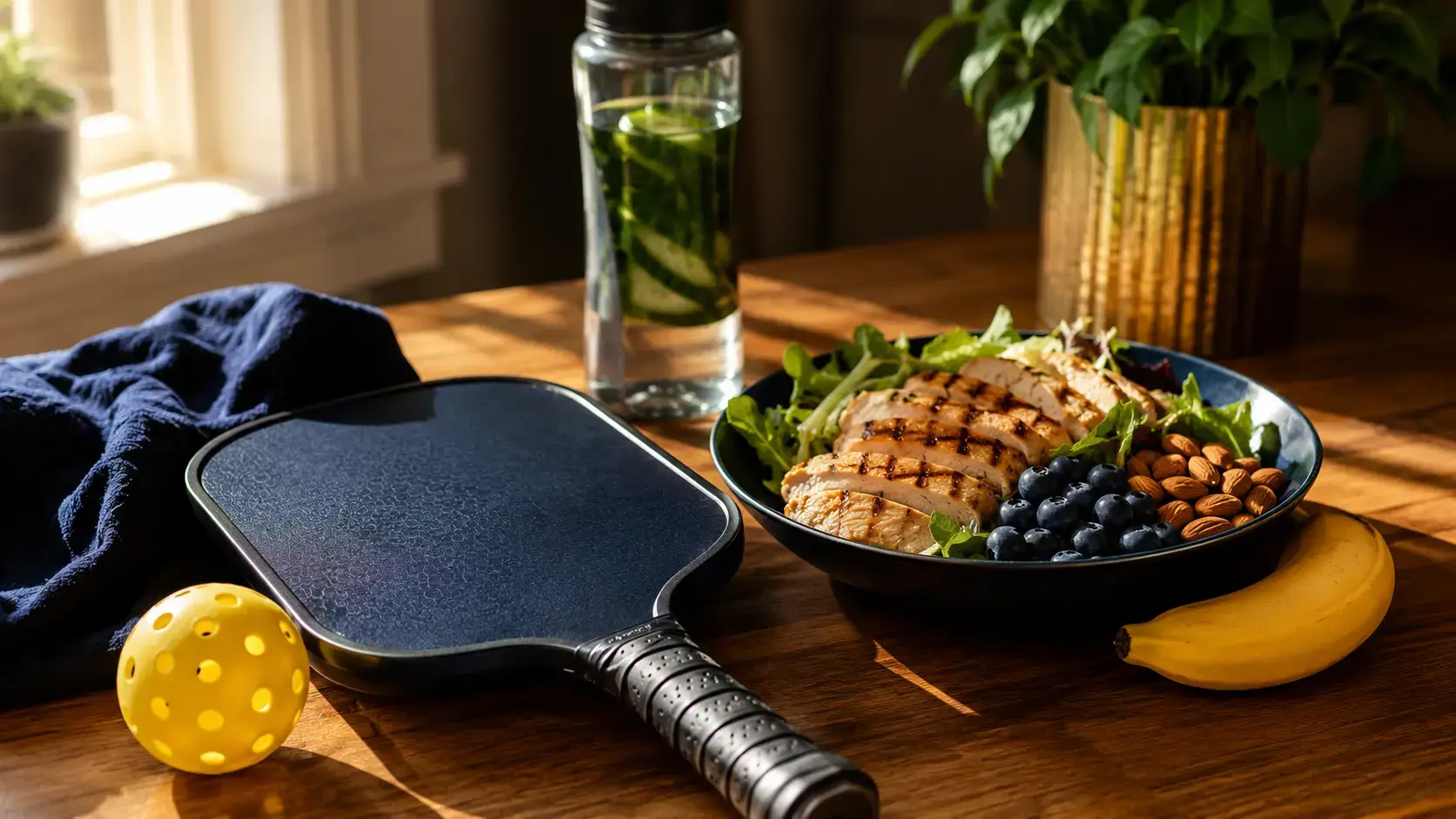
During long sessions, small bites like a piece of fruit or a few nuts keep you going. After play, your body wants to rebuild. A meal with protein and veggies, like grilled chicken and a big salad, helps muscles recover so you feel good the next day.
Hydration Tips for the Court
Water is the simplest performance booster there is. Many players wait until they feel thirsty, but by then you’re already a little dehydrated. Sip water before, during, and after play. On hot days, add a pinch of salt or a splash of coconut water to replace what you lose through sweat. A good insulated bottle makes it easy. The Hydro Flask Wide Mouth with the newer Flex Cap keeps water cold through a full afternoon of games and is a favorite among players of all ages.
A Sample One-Day Clean-Eating Plan for Pickleball
Here’s what a simple day of eating might look like for a player who wants more energy on the court:
- Breakfast: Oatmeal with berries, a spoon of nut butter, and a boiled egg
- Snack: Greek yogurt with a handful of almonds
- Lunch: Grilled chicken wrap with veggies and a whole-grain tortilla
- Pre-game snack: Banana and a few dates
- Dinner: Baked salmon, brown rice, and roasted vegetables
- All day: Plenty of water
Small Changes, Big Results: Building Sustainable Habits
The secret to eating better isn’t a strict diet. It’s small, steady changes you can actually keep up. Swap one junk snack a day. Add one veggie to every dinner. Drink one more glass of water. Over time, these little wins add up to a whole new way of eating that keeps you strong on the court.
Better food gives you more energy, and more energy means more games. That’s where we come in. When you feel good, you’ll want to play more, and joining our group play and clinics is a great way to put that fresh energy to use with players your age and skill level. Good, healthy food, pickleball sport habits, and regular play go hand in hand.
Frequently Asked Questions
What should I eat right before a pickleball game?
Eat a light meal with carbs and a bit of protein about one to two hours before you play. A banana with peanut butter, oatmeal, or a small turkey sandwich all work great. Avoid heavy, greasy food that sits in your stomach and slows you down.
Are sports drinks good for pickleball players?
Most sports drinks have loads of added sugar. For normal play, plain water is best. If you play long and sweat a lot on a hot day, a low-sugar electrolyte drink or a splash of coconut water can help replace lost salts.
How can I get my kids to eat healthier for sports?
Get them involved in picking and making snacks, keep fun healthy options on hand, and be a good example. Tell them how good food makes them faster and stronger on the court. Kids buy in when they understand the why and feel like part of the choice.
Do players over 55 need more protein?
Yes, older players benefit from spreading protein throughout the day to keep their muscles strong. Foods like eggs, fish, beans, chicken, and Greek yogurt support recovery and help you stay moving well on the court for years.
Ready to Get on the Court?
Eating cleaner and cutting the junk gives you the energy to enjoy every rally, no matter your age. Pair those healthy food pickleball sport habits with real time on the court, and you’ll feel unstoppable. Whether you’re a senior looking to stay active or a parent of a young player, we’d love to see you play. Contact us today to learn about our programs, lessons, and community play for all ages and skill levels.
