



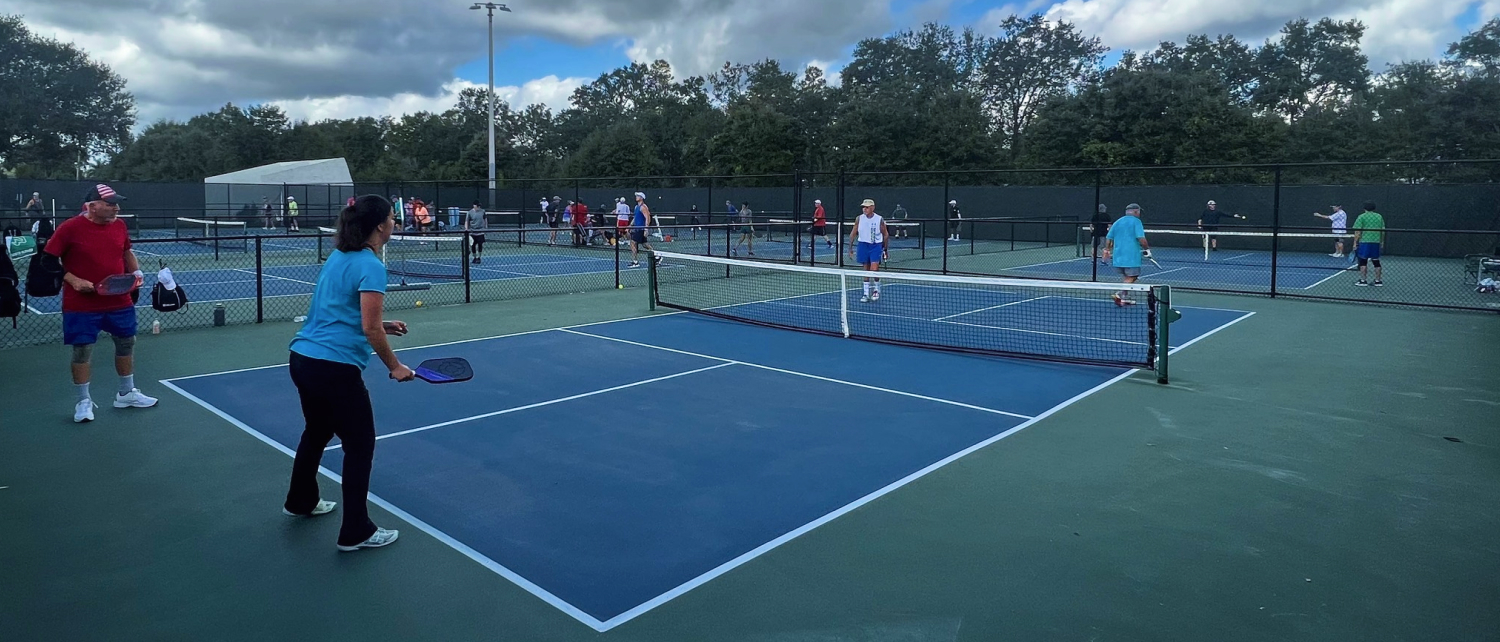
As we age, it’s important to keep our bones strong, but many people struggle to find something they enjoy that also supports their overall health. Pickleball is one of the most popular recreational sports because it combines movement, balance, coordination, and social interaction into one fun activity. No single exercise will strengthen your bones, but weight-bearing activities like pickleball can support bone health when paired with healthy lifestyle habits. Professional pickleball lessons also teach proper movement patterns that build confidence, enhance balance, and encourage safe participation at all skill levels.
Why Bone Health Matters Throughout Life
Our bones are living tissues that constantly rebuild themselves. In younger years, the body typically forms new bone faster than it breaks down old bone. That balance shifts as we get older, so staying active and maintaining healthy habits becomes even more important.
The lower the bone density, the higher the risk of fractures, especially those of the hips, wrists, and spine. People over 50, especially women after menopause, tend to pay more attention to bone strength. Although genetics play a role in bone health, maintaining strong bones throughout adulthood also depends on regular physical activity, a well-rounded diet, and healthy lifestyle choices.
Why Pickleball Is Considered a Weight-Bearing Exercise
Weight-bearing activities enable your body to use gravity while you’re on your feet. These movements support the body’s natural process of maintaining healthy bone tissue.
Pickleball requires walking, controlled jogging, side-to-side movement, lunging, reaching, and frequent changes in direction. These repetitive movements provide healthy pressure on the skeletal system and strengthen the muscles that support the joints.
Pickleball offers moderate exercise that many adults find easier to maintain long-term. It is also easier on the knees and hips than high-impact sports. The smaller court lets players stay active without covering the same distances as in tennis.
Strong Muscles Help Support Strong Bones
They work together on bone health and muscle strength. Stronger muscles support the skeleton and improve stability during movement.
Pickleball naturally works the legs, hips, core, shoulders, back, and arms. Improved functional strength comes from coordinated muscle activation needed to serve, dink, volley, and move toward the kitchen line.
Professional pickleball lessons can also teach you proper footwork and positioning. Good mechanics allow players to move with better control and take unnecessary stress off joints and muscles.
Balance Plays an Important Role in Bone Health
Strong bones are part of overall health. Falls are a leading cause of fractures in older adults, and preventing them becomes more important as we age.
Pickleball helps players react quickly and maintain body control in ever-changing on-court situations. Regular practice tests balance, coordination, and reaction time in ways that closely mimic everyday movement.
Often, players develop better footwork and court awareness and feel more confident moving around. These gains often carry over to functioning in activities of daily living, such as stair climbing, carrying groceries, and walking on uneven surfaces.
Nutrition Continues to Support Healthy Bones
Exercise is most effective when combined with proper nutrition. Calcium remains one of the main minerals involved in bone health, while vitamin D helps the body absorb this mineral efficiently.
Protein also keeps muscles healthy, which indirectly helps bones stay strong by improving stability and movement. Many players benefit from eating balanced meals that include lean proteins, dairy or fortified dairy alternatives, leafy green vegetables, nuts and seeds, and whole grains.
And don’t skip the hydration. Proper hydration helps your muscles work properly and helps you get the most out of your practice time.
Safe Exercise Leads to Consistent Participation
Part of pickleball’s popularity among adults is its ability to adapt to various fitness levels. Beginners can start slower and increase activity as their endurance builds.
Good technique means less unnecessary strain, and qualified instructors help build confidence from the start. We encourage players to warm up before every session, stretch afterward, wear supportive court shoes, and listen to their bodies throughout play.
In general, consistency will be more effective than sporadic, intense workouts. Regular play, with proper recovery, promotes physical fitness and continued enjoyment of the sport.
Pickleball Supports More Than Physical Health
But the benefits of pickleball go beyond your bones and muscles. Social interaction matters for healthy aging, and many players value the friendships they build through regular play.
Mental engagement is also part of overall wellness. In every rally, players must anticipate shots, make split-second decisions, and communicate with their partners in doubles. The blend of physical and mental activity keeps players engaged and makes exercise enjoyable, not a chore.
For many players, pickleball is a reason to stay active. They look forward to working out with friends and strengthening their skills instead of just going through the motions.
Why Instruction Matters for Every Age
Pickleball is easy for beginners to pick up, but good instruction helps establish good habits right away. Good footwork, effective movement, balanced positioning, and proper paddle mechanics all contribute to a safer and more enjoyable experience.
Our pickleball lessons meet players where they are today, while helping them build confidence for tomorrow. If you’re returning to exercise after a few years away or trying an entirely new sport, personalized coaching lets each player progress at a comfortable pace while building skills that support performance and overall wellness.
Building Healthy Habits for the Future
No single activity determines lifelong bone health, but regular movement is still one of the best investments people can make in themselves. Pickleball provides a realistic blend of weight-bearing exercise, strength training, balance work, and social interaction that keeps players moving year after year.
If you’re interested in improving your fitness, promoting healthy aging, or just finding an activity you truly enjoy, pickleball lessons are a fantastic way to learn skills while staying active. Each session is a step toward better movement, more confidence, and better overall well-being.
Frequently Asked Questions
Can pickleball help support healthy bones?
Yes. Pickleball is a weight-bearing activity that encourages movement, muscle engagement, and balance, all of which may help support healthy bones when combined with proper nutrition and regular exercise.
Is pickleball suitable for older adults?
Absolutely. Many older adults enjoy pickleball because the smaller court and adaptable pace make it accessible while still providing meaningful physical activity.
How often should I play pickleball for fitness?
Many players benefit from playing two to four times each week, depending on their fitness level, overall health, and recovery needs.
Are pickleball lessons helpful for beginners and older adults?
Yes. Professional pickleball lessons teach proper technique, footwork, and court positioning, helping players build confidence while reducing unnecessary strain.
Healthy habits begin with enjoyable activities that keep you moving. We invite you to join our pickleball lessons and discover how personalized instruction can help you strengthen your skills, stay active, and support your overall wellness for years to come. Contact us today to learn how to get started.
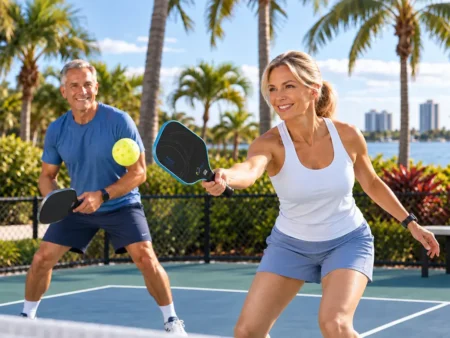
Illustration created with AI
