



Pickleball is growing faster than almost any sport in the country, and with that growth comes an increasing demand for quality coaching, especially for youth players. Parents and adult learners alike often ask the same question: What actually makes a good pickleball coach? Is it tournament medals? Playing level? Years on the court? While those things can be helpful, they are not the primary indicators of coaching excellence.
Great coaching is less about personal achievements and more about the ability to teach, communicate, and develop players in a structured, thoughtful way. When you look closely at the coaches who consistently produce confident, skilled athletes, several key qualities stand out. Understanding these traits helps players and parents make better decisions when choosing the right mentor.
A Strong Understanding of Pickleball Fundamentals
At its core, pickleball is a fundamentals driven sport. Footwork, paddle control, positioning, shot selection, and court awareness form the foundation of everything else. A quality coach must have a deep understanding of these elements, not just as a player, but as a teacher.
Knowing how to execute a third shot drop is very different from knowing how to break it down into teachable steps. A strong coach can identify mechanical errors, explain why something is happening, and provide drills that reinforce correct habits. They understand progression. Instead of overwhelming a student with advanced tactics, they build skill layers in a logical sequence.
For beginners and youth players, this is critical. Early habits tend to stick. A coach who emphasizes clean mechanics, proper movement, and smart decision making sets the stage for long term development. This structured approach helps players grow faster while minimizing frustration and injury risk.
Experience Working With Kids and Understanding Youth Psychology
Coaching children is not simply a smaller version of coaching adults. Kids learn differently. Their attention spans vary, their emotional responses are more immediate, and their confidence can shift quickly based on feedback.
An effective youth pickleball coach understands child psychology. They know when to challenge and when to encourage. They create an environment that balances discipline with fun, structure with creativity. Young athletes need to feel safe making mistakes, because mistakes are where real learning happens.
Communication style matters tremendously. A coach who can translate technical concepts into age appropriate language keeps kids engaged. They recognize that motivation is not one size fits all. Some children respond to competition, others to praise, and others to problem solving challenges.
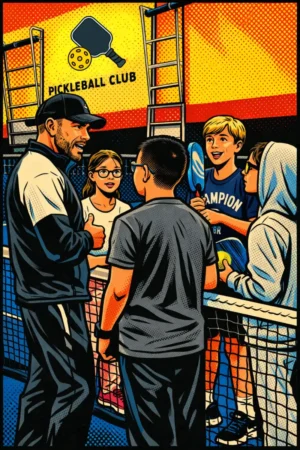
Experience working with kids also means understanding group dynamics. Youth lessons often involve players at different skill levels and personalities. A good coach manages energy, maintains focus, and ensures every child feels included. That environment builds confidence, teamwork, and a love for the sport that lasts beyond the lesson.
Coaching Ability Matters More Than Playing Achievements
There is a common misconception that the best coaches must also be elite players. While high level playing experience can add perspective, it is not a requirement for coaching excellence.
Great coaching is about communication, observation, and problem solving. A coach’s job is to help the student understand how to perform, not to demonstrate personal superiority. In fact, some highly accomplished athletes struggle to teach because skills that feel natural to them are difficult to explain step by step.
A coach who excels at instruction can break movements into simple, repeatable components. They understand how people learn and how to adapt explanations for different personalities and learning styles. This ability often has a far greater impact on player development than the coach’s tournament résumé.
History across sports supports this idea. Many of the world’s most respected tennis coaches did not achieve superstar status as players, yet they guided athletes to elite performance. Coaches like Toni Nadal, who helped shape Rafael Nadal’s legendary career, were not Grand Slam champions themselves. Their strength lay in teaching structure, discipline, and tactical intelligence. Similarly, renowned coaches such as Darren Cahill, who worked with top ranked players, built reputations on their analytical insight and communication skills rather than personal trophy collections.
The takeaway is clear. Coaching excellence is defined by teaching ability, not personal accolades.
The Role of Parents in Choosing the Right Coach
For young athletes, parents play a critical role in coach selection. The decision should go beyond convenience or reputation. Parents should look for alignment between the coach’s philosophy and the child’s needs.
Observe how the coach interacts with players. Are instructions clear and encouraging? Does the coach maintain structure without being overly rigid? Are kids engaged and smiling while still learning? These signals reveal whether the environment supports healthy development.
Parents should also consider communication. A strong coach welcomes questions and provides feedback about progress. They emphasize long term growth rather than short term wins. Youth sports should build character, resilience, and enjoyment, not pressure or burnout.
Another important factor is safety and professionalism. Organized lesson plans, clear expectations, and respectful communication reflect a coach who takes their responsibility seriously. When parents and coaches collaborate, children receive consistent support both on and off the court.
Bringing It All Together: Coaching in Practice
When you combine strong fundamentals knowledge, youth psychology awareness, instructional clarity, and supportive parent collaboration, you create an environment where players thrive. These qualities form the backbone of effective pickleball coaching.
This philosophy is reflected in the coaching approach used by Coach Igor. Rather than focusing on personal accolades, the emphasis is on building solid mechanics, developing smart court habits, and teaching in a way that matches each player’s learning style. Youth sessions are structured yet engaging, ensuring kids stay motivated while mastering essential skills. Communication with parents remains open and transparent, reinforcing a team approach to development.
The goal is not just to create better pickleball players, but more confident learners who enjoy the process of improvement. By prioritizing teaching ability, psychological understanding, and foundational skill building, coaching becomes a pathway to long term success and enjoyment in the sport.
Final Thoughts
Choosing a pickleball coach should never be based solely on playing credentials. True coaching excellence lies in the ability to teach fundamentals clearly, understand how young athletes think and learn, and guide players with patience and structure. History shows that great instructors often shine because of their communication and analytical skills, not their personal achievements.
For parents and players, focusing on these qualities leads to better experiences, stronger development, and a deeper connection to the game. When coaching is done right, pickleball becomes more than a sport. It becomes a foundation for confidence, discipline, and lifelong enjoyment.
Picture Source: AI-generated