



Not every kid learns the same way. Some need one-on-one attention. Others become excited the moment they are around other kids. Some need a little of both before anything works. Teaching pickleball to kids is no different.
The good news is that kids can enjoy pickleball from their very first session. The paddle is light. The court is small. The ball moves at a pace that lets beginners rally within minutes. But getting the most out of those early lessons depends a lot on how the instruction is delivered.
Below is a breakdown of the three main ways coaches teach kids pickleball: individual instruction, group instruction, and the hybrid model. Each one has real strengths. Each one also has limits. Knowing which one fits your child makes a big difference in how fast they learn and how much they enjoy the process.
Individual Instruction
What It Looks Like
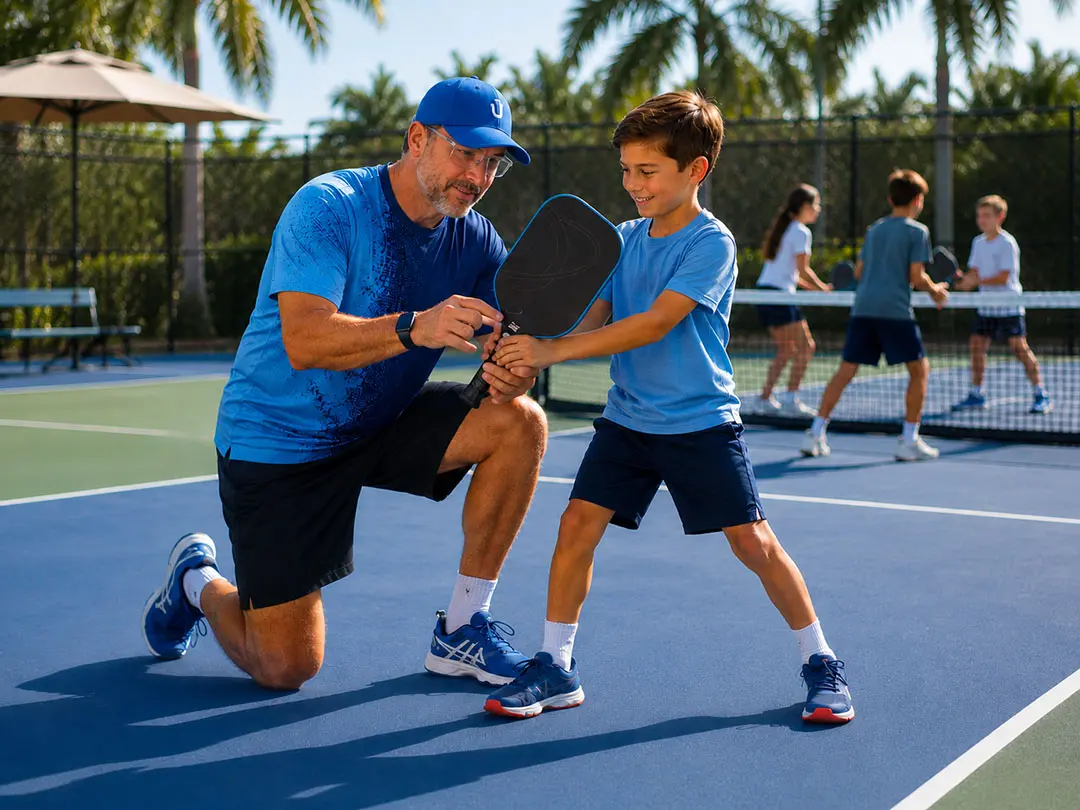
Individual instruction means one coach, one student. The lesson is completely built around that one child. The coach adjusts the pace, the drills, and the language based on what is happening right in front of them.
There are no other kids competing for the coach’s attention. There is no group pace to match. The child gets every minute of the session dedicated to their development.
Benefits of Individual Instruction
- Complete customization. Every drill, every correction, and every explanation is designed for that specific child. If a kid grips the paddle too tightly, the coach catches it immediately and fixes it before it becomes a habit. If a child is ready to move on after two minutes, the coach moves on. If they need ten minutes on the same concept, they get it.
- A safe space to make mistakes. Kids who are self-conscious about making errors in front of peers do much better in a one-on-one setting. There is no audience. They can swing and miss, reset, and try again without any social pressure. That freedom allows them to take risks and try new things faster.
- Faster technical development. Because every moment of the lesson is focused on one player, technical habits form correctly from the beginning. Footwork, paddle position, body rotation, and kitchen awareness all receive real-time attention.
- Stronger coach-student relationship. Kids open up more in individual settings. A child who would never ask a question in a group lesson will ask plenty of questions one-on-one. That communication makes coaching much more effective over time.
Disadvantages of Individual Instruction
The biggest limitation is that individual lessons do not prepare kids for actual game situations. Pickleball is mostly played as doubles. Reading a partner, communicating during a point, and adjusting to different opponents are skills that simply cannot be developed without another player on the court.
Individual lessons also cost more than group sessions. For families on a budget, weekly private sessions may not be realistic in the long term. A child who trains only privately may feel uncomfortable or overwhelmed the first time they step into a real game. They have the technical skills but not the competitive experience to go with it.
Best Fit by Age Group
- Ages 5 to 8: This age group is where individual instruction shines most. Young children have short attention spans and need constant feedback. A group setting at this age often involves a lot of waiting around, which can lead to distraction and frustration. One-on-one keeps them active, engaged, and learning the whole time.
- Ages 9 to 12: Kids this age are increasingly self-aware. They notice when they are behind others and can become embarrassed or discouraged. Private lessons remove that comparison entirely. They improve at their own pace and build genuine confidence.
- Ages 13 and up: Teens who are serious about the sport and want to compete benefit greatly from private instruction. They come in with specific goals and are motivated enough to do the repetition required to build real skill.
Best Fit by Personality
Individual lessons work best for shy or introverted kids, children who have had negative experiences in team settings, kids who are highly sensitive to criticism in front of peers, and any child who needs a calm and structured environment to feel comfortable learning.
Group Instruction
What It Looks Like
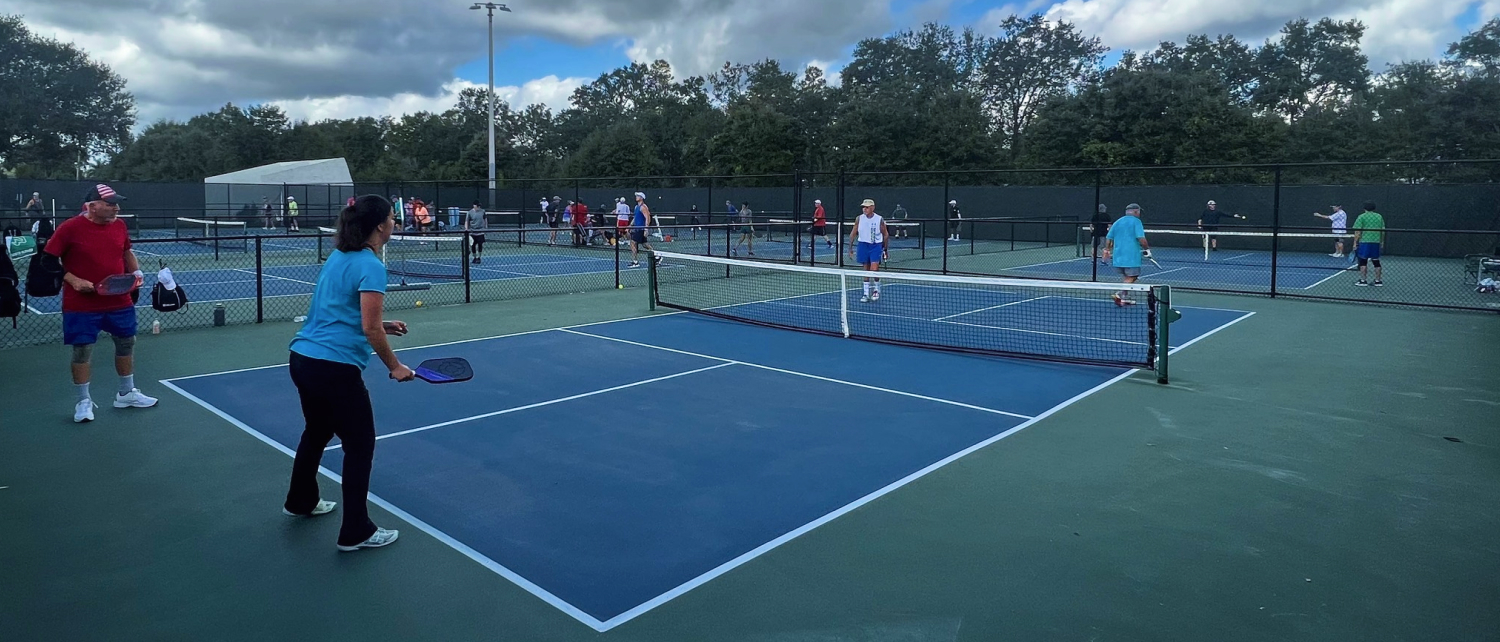
Group lessons put multiple kids on the court at the same time. The coach runs drills and games that involve everyone. Kids rotate partners, compete in friendly games, and learn together. Sessions typically run anywhere from four to eight students, depending on the format.
Benefits of Group Instruction
- Built-in energy and motivation. Kids feed off each other. A group setting creates a natural buzz that private lessons simply cannot replicate. Kids who might disengage in a private lesson stay locked in when peers are around, moving, competing, and having fun.
- Real game experience from day one. Group lessons naturally create match-like situations. Kids learn to play with a partner, communicate during points, and adjust their game to different opponents. These are skills that are nearly impossible to develop in a solo setting.
- Social development. For many kids, the social piece is just as important as the sport itself. They make friends. They look forward to coming back not just for pickleball but because their friends will be there. That social pull keeps kids engaged in the sport long term.
- More affordable. Group sessions are priced lower than private lessons. Families who want consistent instruction without the cost of private sessions find real value in a group format.
- Learning from watching peers. Kids pick up a lot by watching other kids play. Seeing a peer execute a good dink shot or a solid third shot drop often teaches faster than hearing a coach describe it. Children imitate naturally.
Disadvantages of Group Instruction
Individual attention is limited. A coach managing six or eight kids at once cannot catch every technical error in real time. A bad grip or an off-balance stance may go unaddressed for several sessions if the coach focuses on another student.
Group lessons move at the pace of the group. Kids who pick things up quickly may feel bored or held back. Kids who are struggling may fall behind without getting the specific help they need at that time.
Shy or anxious children can quietly disengage in group settings. They avoid trying new shots because they do not want to make mistakes in front of others. A child can technically attend every group lesson and still not be absorbing much if they spend most of the session avoiding attention.
Best Fit by Age Group
- Ages 7 to 10: Kids this age are social and learn through play. When a lesson feels like a game, they do not realize how much they are picking up. Group sessions structured around fun drills and short games are ideal for this range.
- Ages 10 to 14: Peer competition is a powerful motivator at this age. Kids want to keep up with their friends. They push harder in a group than they would alone. The social aspect also keeps them committed to the sport over time.
Best Fit by Personality
Group lessons are a good fit for outgoing and social kids, children who are already comfortable in a group environment, kids who get their energy from being around others, and any child who is motivated by friendly competition.
The Hybrid Model
What It Looks Like
The hybrid model combines private instruction with group play. A child gets individual coaching sessions to build their technical foundation. They also participate in group sessions where they apply that foundation to other kids in real game situations.
This is how most serious young athletes develop across every sport. They work on specific skills with a coach in a focused setting, then bring those skills into competitive environments to test them.
Benefits of the Hybrid Model
- The best of both worlds. Private sessions build clean mechanics and address each child’s specific weaknesses. Group sessions build game sense, competitive experience, and social connection. Together, they create a complete player.
- Faster overall development. A child who trains only privately is technically strong but inexperienced in the game. A child who only trains in groups is socially engaged but may have unaddressed technical problems. The hybrid model closes both gaps simultaneously.
- Confidence building. Kids who receive private coaching before joining group sessions show up to group play with real confidence. They already know the mechanics. They have already made their mistakes in a safe environment. The group setting becomes an opportunity to show what they can do rather than a place to feel exposed.
- Adaptability. The hybrid model works for almost every age group and personality type. It can be adjusted as the child grows. A younger child might do more private sessions with occasional group play. An older child preparing to compete might flip that ratio, doing more group play with periodic private tune-ups.
Disadvantages of the Hybrid Model
The hybrid model requires the biggest time and financial commitment. Families need to consistently schedule and attend two types of sessions, which is not always realistic. Without that consistency, combining both approaches reduces the benefits.
It also requires a coach who can intentionally connect the private and group work, reinforcing the same concepts across both settings. If those two environments feel disconnected, the child does not get the full benefit.
Best Fit by Age Group
- Ages 8 to 12: This is the strongest age range for the hybrid model. Kids this age have enough focus to benefit from private instruction but also need the social energy of playing with peers. Private lessons build their confidence, and group sessions give them a chance to use it.
- Ages 12 and up: Older kids and teens with competitive goals benefit most here. Private sessions target specific weaknesses in their game. Group and match play build the toughness and adaptability needed to compete.
Best Fit by Personality
The hybrid model fits nearly every personality type when structured correctly. Shy kids build confidence privately before stepping into group play. Competitive kids get both focused individual coaching and a group environment to test themselves. Social kids get the team energy they love alongside the personalized attention that actually improves them.
Choosing the Right Fit for Your Child
If your child is young, shy, or needs a calm and focused environment, start with private lessons. Build their foundation and their confidence before putting them in a group.
If your child is social, active, and already comfortable around other kids, group lessons are a great starting point. They will learn from the energy around them and stay motivated because their peers are there.
If your child is serious about improving and you want to give them the most complete development path available, the hybrid model delivers the strongest results at any age.
Pickleball clicks fast for most kids. The real job is finding the right teaching environment so that love for the sport has room to grow.
Frequently Asked Questions
At what age can kids start pickleball lessons?
Kids as young as 5 can begin learning pickleball, especially in a one-on-one setting. The equipment is lightweight, the court is compact, and beginners can start rallying within their very first session. For group lessons, most kids are ready around ages 7 to 8, when they have enough focus to follow instructions in a group environment without getting too distracted.
How many private lessons does a child need before joining a group session?
It depends on the individual child, but most kids benefit from two to four private lessons before stepping into a group setting. That gives them enough foundation to keep up with basic drills without feeling lost or frustrated. Kids who are naturally athletic sometimes need only one or two sessions before they are ready for group play.
What if my child tried pickleball in a group and did not enjoy it?
That is more common than most parents expect and usually relates more to the environment than the sport itself. Some kids need to build a foundation of confidence before a group setting feels safe. Switching to a few private lessons often changes everything. Once a child has the basics down and feels good about their ability, group sessions become fun instead of stressful.
How do I know if the hybrid model is worth the extra commitment?
If your child has shown a genuine interest in pickleball and wants to keep improving, the hybrid model is worth it. The combination of focused skill-building and real game experience is what produces players who are both technically sound and comfortable competing. If your child is still exploring whether pickleball is for them, starting with group lessons is the lower-commitment way to find out.
Picture Source: AI-generated
