



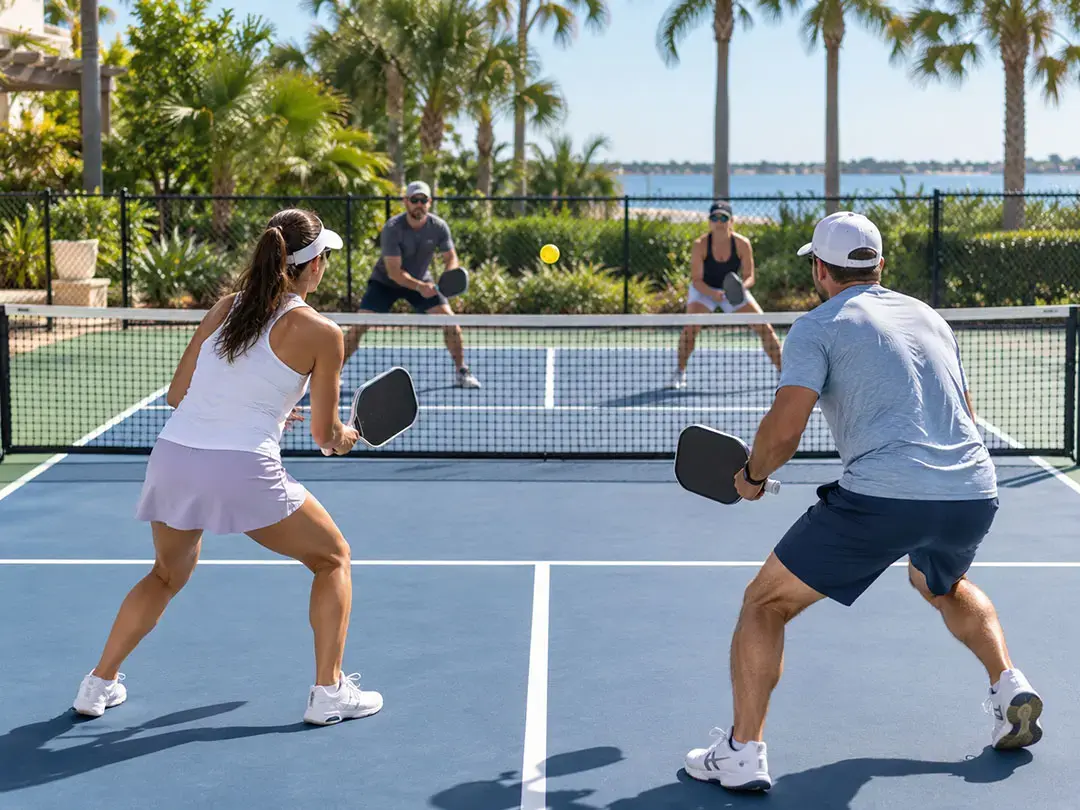
Doubles is the most popular way to play pickleball and a fun mix of strategy, teamwork, communication, and athleticism. Most new players pick up the rules fairly quickly, but it usually takes more practice and help to learn to work well with a partner. Doubles success is so much more than just hitting quality shots. That requires court awareness, positioning, communication, and smart decision-making on every single point. We teach beginners these skills, confidence, and habits through professional pickleball lessons that result in more enjoyable and competitive matches.
Why Doubles Is the Preferred Format
Most recreational games, leagues, and tournaments use the doubles format, which promotes longer rallies and focuses on teamwork. Playing doubles with a partner makes the game less physically demanding than singles while giving you a chance to develop strategy with someone else.
Doubles is more fun for many beginners because you can cheer each other on as you learn the game. Good teamwork can help players to overcome their individual weaknesses and build confidence through shared success. As you gain experience, doubles becomes a rewarding mix of communication, movement, and shot selection.
Understanding Court Positioning
One of the first lessons for a new doubles player is to learn how to position himself on the court. Many beginners stand too close to the baseline or play away from their partner, leaving unnecessary holes for opponents to attack.
After a serve and return, successful teams attempt to enter the non-volley zone if they are able. Partners standing together at the kitchen line control the pace of the rally and leave less open court behind them.
We teach players to move as one. If one partner shuffles left or right, the other should shuffle the opposite way. This coordination and alignment also safeguards the middle and reduces the opportunities for opponents to find open space.
Communication Creates Stronger Partnerships
Even experienced players can lose points because they don’t communicate. Calling shots early helps prevent hesitation and reduces collisions and confusion in fast rallies.
During every match, simple phrases like “mine,” “yours,” or “switch” become valuable tools. Partners should talk between points about positioning, strategy, and adjustments, not about mistakes.
Good communication breeds trust. Supporting each other after missed shots builds confidence that carries through the match and often leads to better overall performance.
Learning the Importance of the Kitchen Line
In doubles, you win many points in the non-volley zone, or the kitchen. Teams that control this area consistently tend to position themselves better on the offensive and defensive sides of the ball.
Rather than hanging back at the baseline, beginners should learn to advance safely to the net after serving. Third-shot drops are gentle shots that can create an opportunity to move to the kitchen and stop opponents from attacking with powerful shots.
Once both partners have crossed the kitchen line, they have more control over angles, pace, and shot placement. Having this position is a key objective in any rally.
Shot Selection Matters More Than Power
Many beginners think the harder you hit, the better you get. Indeed, controlled placement is often much more successful than power alone.
Dinks, resets, controlled volleys, and accurate serves enable players to create high-percentage opportunities while minimizing unnecessary errors. Patience matters even more in long rallies. Successful doubles teams don’t go for the hard winners. They wait for the right opportunity to attack.
We want students to think strategically and not emotionally. Each shot needs to have a purpose that leads into the next phase of the rally.
Covering the Middle of the Court
One of the most common problems for a beginning doubles team is deciding who will cover balls down the middle.
Each partnership develops its own preferences, but most teams allow the player with the stronger forehand to take the middle shots whenever possible. Any strategy matters less than making a clear decision before the match starts.
The more you communicate and practice, the less hesitation you’ll have, and both players will react confidently in fast exchanges.
Serving and Returning With Purpose
The serve and return determine every rally. Beginners often focus on power, but consistency usually brings better results.
A deep serve reduces the offensive options of the receiving team, and a deep return reduces the offensive options of the serving team. After players make these opening shots, their next move should be to work toward good court positioning, not admire the shot they just hit.
Professional pickleball lessons help players learn reliable serves and returns that could consistently put them in a better position throughout every point.
Common Mistakes Beginners Can Avoid
Every new player has a learning curve, and recognizing common mistakes helps you learn faster. Constantly standing together, leaving too much room between partners, going for every ball, and hitting difficult shots in a hurry often lead to avoidable mistakes.
Another common habit is watching the ball instead of anticipating the opponent’s next shot. Reading body position and paddle angle helps players react faster and make better decisions.
Structured instruction lets players practice these situations and build better habits before poor techniques become hard to change.
Why Professional Instruction Makes a Difference
Learning a doubles strategy takes time and practice. It’s personalized coaching with instant feedback, so players improve faster.
Pickleball lessons emphasize positioning, communication, footwork, shot selection, and teamwork while adjusting to the player’s experience level. One-on-one coaching is a great way to build a solid foundation that translates to recreational games, leagues, and tournaments, no matter who you are learning with, whether it be a spouse, friend, or regular doubles partner.
Players continue to develop their skills and learn that the keys to successful doubles are consistency, trust, communication, and intelligent decision-making, not just individual shot-making.
Enjoy Growing Together
Doubles pickleball is so much more than a game. It offers opportunities to meet friends, work as a team, and stay active with others who share your passion for the game.
If you’re new to the game or want to be a more reliable doubles partner, pickleball lessons can help you improve with confidence. The more you play, the more you understand the game and the more fun you have in every match.
Frequently Asked Questions
How is doubles pickleball different from singles?
Doubles emphasizes teamwork, communication, positioning, and strategy while requiring less court coverage than singles.
Where should beginners stand during doubles play?
After serving and returning, both partners should work toward the kitchen line whenever possible while moving together as a team.
Why is communication important in pickleball doubles?
Clear communication prevents confusion, reduces missed shots, and helps partners coordinate movement and strategy throughout each rally.
Are pickleball lessons helpful for beginner doubles teams?
Yes. Professional instruction teaches positioning, teamwork, communication, and shot selection to help new players improve faster.
Ready to become a stronger doubles player? We invite you to join our pickleball lessons and learn the skills, strategies, and teamwork that make every match more enjoyable. Contact us today to begin improving your game with personalized instruction.
Illustration created with AI
