



One of the most important decisions a player can make is picking the right pickleball paddle. Your game is built on practice and experience, but the right equipment for your style of play can help you feel more comfortable, confident, and consistent. Today’s paddles come in various shapes, weights, core materials, surface textures, and handle lengths, giving players more choices than ever. Knowing how these features affect performance makes the buying process easier. During our pickleball lessons, we also help players choose the right paddle for their skill level and future growth.
Why Your Paddle Matters
Your paddle connects you to every shot you hit. A paddle that feels comfortable in your hand will give you better control, smoother swings, and more confidence on the rallies.
Many beginners think that the most expensive paddle will give you the best results. The perfect paddle is actually very player-dependent. Experience, physical strength, playing style, and personal preference all affect which paddle performs best. Usually, trying a few options before buying leads to a better long-term experience.
Understanding Paddle Weight
Weight remains one of the first characteristics players notice when picking up a paddle. Modern pickleball paddles generally fall into lightweight, midweight, and heavier categories, each offering different advantages.
Lightweight paddles allow for faster hand speed and are easier to maneuver during quick exchanges at the kitchen line. Players who rely on quick reactions often appreciate their responsiveness.
Midweight paddles are still the most popular, offering a good balance of power and control. They are comfortable for long periods of play and suit recreational and competitive players alike.
Heavier paddles naturally generate more power with less effort to swing but can become more tiring during extended matches. Some players also find that heavier paddles can increase the strain on the wrist, elbow, or shoulder if you don’t have proper form.
Core Materials Continue to Evolve
Recent paddle technology has introduced several core materials designed to improve feel, consistency, and durability. Polymer honeycomb cores are still among the most used because they provide comfortable control, touch, and less vibration.
Manufacturers continue to innovate new foam technologies and hybrid constructions to improve stability and the paddle’s sweet spot. These innovations let players enjoy more forgiveness on off-center contact without significantly changing the paddle’s overall feel.
Technology has improved significantly, but technique still matters more than equipment.
Surface Materials Affect Performance
The face of the paddle also influences the ball’s response at contact. Generally, fiberglass surfaces provide a livelier response with more power and appeal to players who enjoy playing aggressively.
Carbon fiber and raw carbon have gained popularity for the control they provide and the ability to create spin with the right technique. Manufacturers are continually developing composite materials in their quest for the perfect balance of durability, touch, and consistency.
Surface choice depends on whether the player prefers power, precision, or a combination of both.
Grip Size and Handle Length Matter
Comfort starts with a well-fitting grip. A grip that is too small can lead to too much wrist movement, and a grip that is too large can decrease paddle control and contribute to fatigue.
Handle length is also a consideration. Players who hit two-handed backhands tend to prefer longer handles, as these provide more room for both hands. Others prefer shorter handles to increase the paddle face and sweet spot.
We often evaluate grip size in pickleball lessons because even small changes can increase comfort and shot consistency.
Paddle Shape Influences Your Game
Traditional shapes are still popular because they offer plenty of forgiveness across the face. Longer paddles give more reach and leverage but with a slightly narrower sweet spot.
Players who want to react quickly during kitchen exchanges may prefer wider paddle faces, while those seeking extra reach for overheads and passing shots often enjoy elongated designs.
Rather than simply reading product descriptions, players can experiment with different shapes and find what feels best in play.
Matching Your Paddle to Your Playing Style
All players take time to develop their own style. Some like patient rallies based on dinks, resets, and controlled placement. Some like aggressive driving and quick attacks whenever the opportunity arises.
Control-oriented players often prefer paddles with a softer feel and larger sweet spots, while power players may prefer paddles that deliver more ball speed. Many recreational players will find that balanced equipment works well in various situations, rather than specializing in one area.
We recommend that players assess their strengths honestly, rather than purchasing equipment based on professional endorsements or marketing claims.
Why Demo Programs Are Valuable
The best way to choose a paddle is to try out several models before making a final decision. Demo programs let players compare weight, balance, grip comfort, and overall feel in actual play.
Specs can help, but personal experience often tells you what the numbers can’t fully explain. What feels best in one person’s hand may not feel the same to another person.
We do paddle evaluations a lot in our coaching sessions to help students find what works for their development.
Technique Always Comes Before Equipment
Paddle technology is improving and improving, but it’s no substitute for good fundamentals. Good footwork, proper mechanics, smart shot selection, and consistent practice still matter most for performance.
Professional coaching gets the best out of players, no matter what paddle they choose. Little technique improvements are often more effective than buying the latest gear.
Quality coaching, along with the right equipment, gives a solid basis for ongoing development at any age or level.
Finding Confidence With the Right Paddle
The right paddle should feel like an extension of your hand. It should give you confidence on serves, dinks, volleys, and overheads and encourage the way you most enjoy playing.
Whether it’s your first paddle or you’re upgrading after years of experience, taking some time to assess your options will help you make a decision that benefits your game. With the right equipment and professional pickleball lessons, you can keep improving and play every game with more confidence.
Frequently Asked Questions
How do I know which pickleball paddle is right for me?
The best paddle depends on your experience, playing style, comfort, grip size, preferred weight, and how it feels during play.
Should beginners buy an expensive pickleball paddle?
Not necessarily. Many beginners benefit from quality midrange paddles as they develop their technique before investing in premium equipment.
Does paddle weight affect performance?
Yes. Lighter paddles improve maneuverability, while heavier paddles generally provide additional power. Midweight paddles offer a balance of both.
Can pickleball lessons help me choose a paddle?
Yes. Professional pickleball lessons give players personalized recommendations based on technique, experience, and playing style and often offer opportunities to try different paddles.
Choosing the right paddle is just one part of becoming a more confident player. We invite you to join our pickleball lessons to improve your technique, evaluate equipment that fits your game, and continue developing your skills with personalized instruction. Contact us today to learn how to get started.
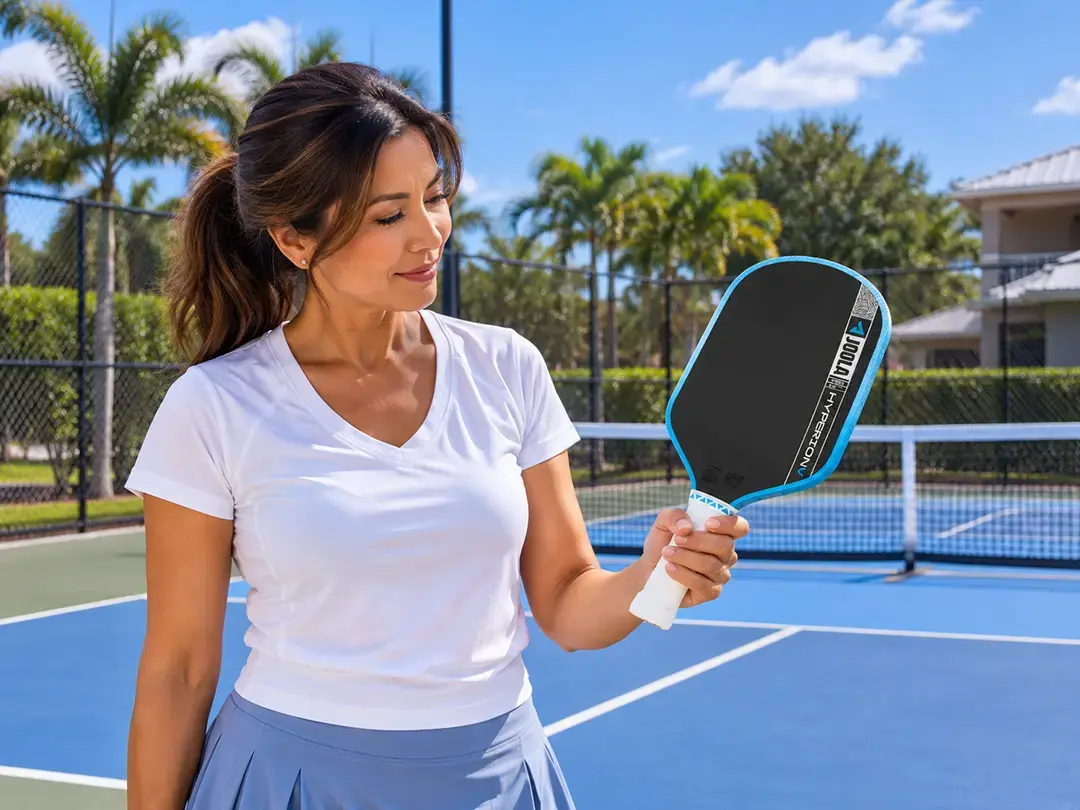
Illustration created with AI
