



Pickleball strategy has evolved quickly over the last few years. The classic advice for the serving team has long been simple: serve, defend the return, then hit a soft third shot drop to earn your way to the kitchen. That blueprint still works, and it will always be a core skill. However, more and more high-level players are choosing a different option on the third shot: the third shot drive.
You will see this trend across the professional game, including from top players such as Ben Johns, who frequently uses a third shot drive to create a predictable ball for his team to attack and transition. Some players use it selectively, and others use it as a primary pattern, depending on matchups, conditions, and their own strengths. Either way, the third shot drive is no longer a backup plan. It is a modern, intentional tactic with clear benefits when executed correctly.
What Is a Third Shot Drive
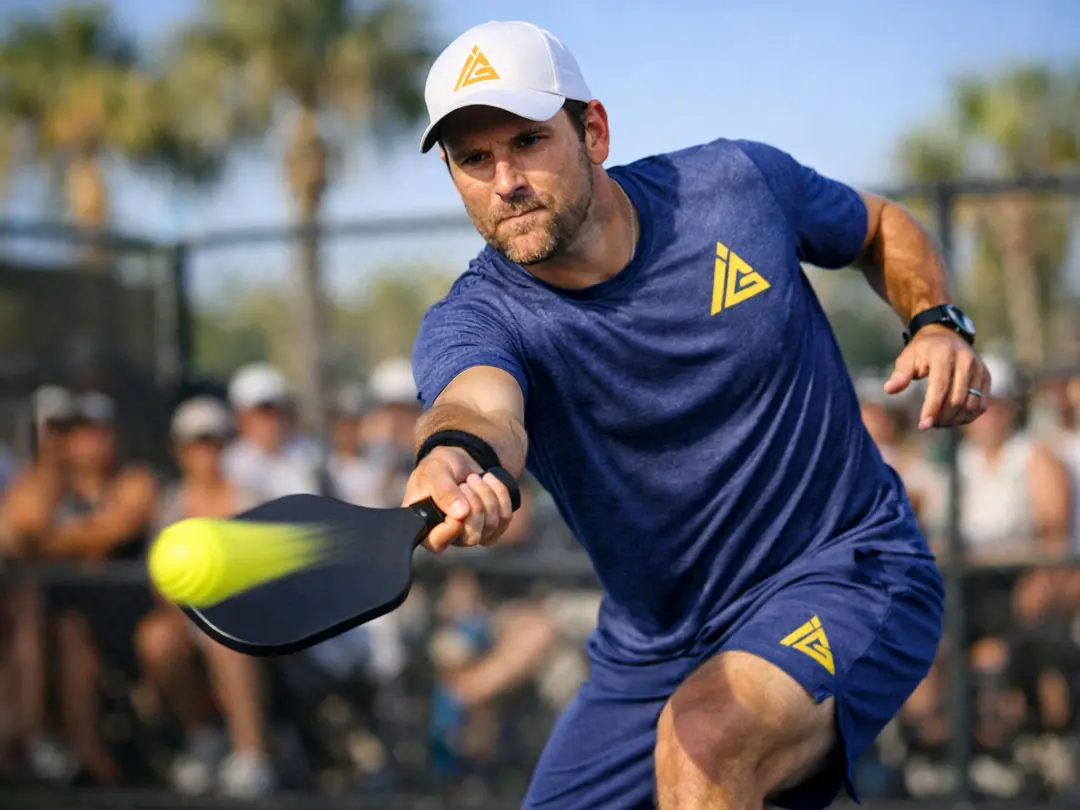
The third shot drive is a firm, topspin oriented groundstroke hit by the serving team on shot three, after the return of serve. Instead of dropping the ball softly into the non-volley zone, you drive it with pace and purpose, aiming to force a defensive response that sets up your team’s transition.
The goal is not to blast a winner. The goal is to create pressure, produce a pop-up or a predictable block, and then move forward behind the shot.
How Famous Pros Use the Third Shot Drive
In today’s pro game, the third shot drive is often used as a repeatable pattern, not a random swing. Players like Ben Johns, Anna Leigh Waters, Tyson McGuffin, JW Johnson, and other top professionals commonly drive when the return is deep but manageable, especially when they like the matchup or see a weakness in an opponent’s block. What makes it “pro level” is not raw speed. It is the combination of heavy topspin, smart targets, and disciplined transition. Many pros drive to the middle or at a player’s backhand shoulder, then expect a controlled block that sets up either an attackable fifth ball or a simpler fifth shot drop. You are not just hitting hard. You are building a point.
Why More Pro Players Are Driving on the Third Shot
At higher levels, defenders have become very comfortable against slow, floating drops. Returning teams often crowd the kitchen line and punish any drop that sits up. A well-struck drive changes the timing and reduces the margin for the returning team.
One benefit is that a drive can force a blocked volley that lands shorter and higher than a well-placed drop would allow. If the ball comes back as a midcourt block or a slightly elevated reset, the serving team can step in and take control of the next ball.
Another benefit is pattern creation. A drive often produces a predictable reply, such as a backhand block to the middle or a crosscourt block to the hitter’s side. Predictability helps both partners move and volley with confidence. Many teams would rather anticipate a block than guess whether the opponents will attack or counter a soft drop.
A third benefit is that the drive can be easier to execute under pressure, especially in wind, in sun, or on faster surfaces. Drops demand touch and precision. Drives demand clean mechanics, spacing, and topspin. In certain conditions, the drive is the more reliable choice.
The Key Benefits of the Third Shot Drive
A strong third shot drive puts the returning team on defense immediately. Even if the opponents handle the ball, they often do so with a compact, controlled block rather than an aggressive swing. That defensive posture gives the serving team time to move forward.
A drive can also expose weak volleys or shaky hands. If an opponent struggles with pace, repeated drives can create errors, pop-ups, or poor placements that your partner can finish.
Another advantage is that it can open the door for an easier fifth shot drop. If the fourth shot is a block that lands in the transition zone, the fifth shot drop becomes shorter, simpler, and higher percentage than a full-court third shot drop.
How to Hit a Reliable Third Shot Drive
A consistent third shot drive starts with decision-making. Do not drive every ball. Drive the right ball. If the return is deep and skidding low, a drive can be tough, but it can still be effective if you hit with topspin and a safe net clearance. If the return is short, sits up, or lands in your strike zone, the drive becomes a high-percentage play.
Mechanically, focus on four priorities.
First, spacing. Create room between your body and the ball so you can swing smoothly. If you get jammed, your drive will pop up or miss wide.
Second, topspin. Topspin is your safety. It brings the ball down into the court after clearing the net. Think low-to-high with a stable wrist and a controlled finish.
Third, direction. The highest-percentage targets are usually through the middle, at the inside shoulder or hip, or to an opponent’s backhand side. Middle drives reduce angles and confusion, and they also protect you from getting pulled wide by sharp crosscourt counters.
Fourth, height over the net. A drive that clips the tape or stays too low is not pro level. It is simply risky. Give yourself comfortable net clearance and let topspin do the work.
What You Should Do Next After the Drive
The third shot drive is only valuable if you transition correctly. Many players drive, admire the shot, and stay back. That wastes the entire point of driving.
After you drive, you should move forward with purpose, but not recklessly. Take a few quick steps into the transition zone, split step as your opponents make contact, and be ready for the fourth shot. Your paddle should be up, your stance athletic, and your mindset defensive first. Expect a block, but respect the possibility of a counterattack.
Your partner should also move with you. If one player advances and the other stays back, the court opens up. The best transition is coordinated, with both players entering the midcourt together and stopping together for the split step.
Is the Fifth Shot a Drive or a Drop
This is the critical question, and the answer depends on the fourth shot.
If the fourth shot comes back as a high block, a floating ball, or a ball that sits up in the transition zone, the fifth shot can be another drive or an aggressive volley. This is where teams can drive and crash successfully, because they earned an attackable ball.
If the fourth shot is a low, controlled reset into your transition zone, the smartest fifth shot is often a drop. In modern pickleball, many points follow a drive then a drop. The third shot drive forces a shorter, more manageable fourth shot. Then the fifth shot drop completes the journey to the kitchen with a higher success rate.
A helpful rule is simple: drive attackable balls, drop unattackable balls. If you feel rushed, off-balance, or forced to hit up, choose the drop. If you can hit forward and down with good margin, choose the drive.
Is This Appropriate for Beginners
Yes, but with clear boundaries.
For beginners, the third shot drive can be easier than the third shot drop because it feels more like a familiar groundstroke. It can also help beginners keep the ball in play and avoid the common mistake of floating a drop too high.
However, beginners often drive without topspin, aim too close to the net, and stay back after driving. Those habits create easy volleys for the opponents and prevent the serving team from ever reaching the kitchen.
A good beginner progression is to learn a controlled drive that stays in the court and then immediately practice the transition. If you can drive at about sixty to seventy percent pace with topspin and a safe net clearance, you will get more value than trying to hit a full-power winner.
At the same time, beginners should still build a third shot drop. Long-term improvement requires both tools. The best players do not choose between drive and drop forever. They choose based on what the return gives them and what the situation demands.
Frequently Asked Questions
Should I always hit a third shot drive if I can hit hard
No. Power without purpose is a gift to good defenders. Drive when you can create pressure and still maintain control and topspin.
Where should I aim my third shot drive
Middle is often the safest, most disruptive option. You can also target the opponent’s backhand side or the player who looks less comfortable volleying pace.
What is the biggest mistake players make after driving
Not moving forward and not split stepping. The transition is part of the tactic. Without it, the drive is the just a hard third shot that does not change the point.
Can the third shot drive replace the third shot drop
Not completely. The drop remains essential, especially against strong blockers who neutralize drives. Most winning teams blend both shots.
Conclusion
The third shot drive has become a central pattern in modern pickleball because it applies pressure, creates predictable responses, and often sets up an easier fifth shot drop or an attackable ball. If you learn to drive with topspin, target smart areas, and transition with discipline, you can use this tactic at every level of play.
Train the Third Shot Drive With a Coach
If you want to add a reliable third shot drive to your game, and learn exactly when to drive versus drop based on your opponents and your level, book a lesson with Coach Igor at IG Pickleball. You will get clear technique cues, target selection, and step-by-step transition patterns you can use immediately in games. Schedule here: https://igpickleball.com/ or call 813-444-7930.
