



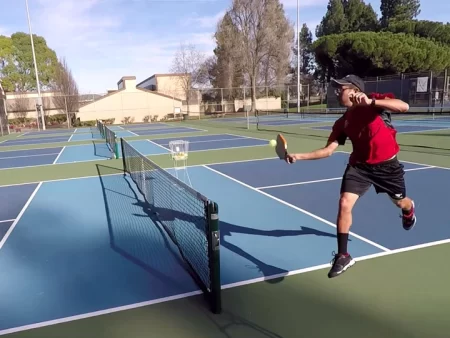
The erne shot pickleball players love is one of the most exciting plays you can pull off on the court. It’s the kind of move that makes your opponents freeze, and your teammates cheer. In simple words, the erne shot happens when a player jumps from outside the non-volley zone, hits the ball in mid-air, and lands either inside or outside that zone. The shot is named after Erne Perry, the clever player who made it famous. It works best in high-pressure moments when catching your opponent off-guard really matters. But to hit it clean, you need good timing, solid footwork, and a clear understanding of the rules around volleys and the kitchen.
What Is an Erne Shot and Why Use It?
An erne shot pickleball move lets you attack a ball heading down the sideline near the net without breaking the kitchen rules. Instead of standing in the non-volley zone (which is against the rules for a volley), you move around the side of it. You either jump over the corner of the kitchen or step around it and hit the ball out of the air. This gives you a sharp angle and a chance to smash the ball before your opponent can react. It’s a great weapon for intermediate and advanced players who want to add surprise to their game.
The Strategic Advantage in High-Pressure Moments
The erne shines when the rally gets tense. If your opponent is dinking to the same spot over and over, you can sneak into the erne position and take the ball early. Because the shot comes so fast and from an unexpected angle, your opponent often has no time to set up. That pressure alone can force weak returns for the rest of the game. Just remember, the erne is a bold play, so pick your moments and don’t force it.
Step 1: Familiarize Yourself With the Non-Volley Zone Rules
The rules around the non-volley zone are at the heart of a legal serve. You cannot volley the ball (hit it before it bounces) while your feet are inside the kitchen. So the erne asks you to start from outside the zone, hit the ball in the air, and land either inside or outside the kitchen. Your body and your momentum cannot carry you into the zone while you make contact. Before you ever try an erne, learn these rules cold so you don’t give away easy faults.
Step 2: Assess the On-Court Situation
The erne shot only works when the moment is right. It’s best used when your opponents are on defense or about to send back a weak dink. Learn to read the rally, guess where the ball is going, and decide fast if the erne is the smart play. Practice watching different game scenarios, so you know when jumping into the erne will give you the edge. This kind of court awareness is what separates flashy from effective.
Step 3: Perfect Your Footwork
Footwork is the base of every good erne. You have to move quick and clean toward the sideline and the kitchen line while keeping your balance. Practice moving from the middle of the court out to the corner of the non-volley zone with fast, short steps. Then work on your jump, making sure you can control your body in the air. Do these drills over and over so the movement becomes muscle memory. A properly built court with clear kitchen lines makes this footwork way easier to nail down, which is why a good playing surface matters so much.
Step 4: Sharpen Your Volley Skills
A strong, accurate volley is the core of the erne shot. Work on volleys from many angles and positions. Focus on clean contact, controlling where the ball goes, and changing your pace and spin. The goal is a powerful yet precise volley. When you finally hit the erne, you want the ball to land exactly where you plan, giving your opponent almost no chance to answer. Spend time on the net game, and your erne will get better fast.
Step 5: Practice the Jump-Volley Movement
Now put your footwork and your volley together into the jump-volley motion the erne needs. Start slow and just focus on the timing. Get the feel of leaving from outside the kitchen, hitting in the air, and landing safely. As you get comfy, speed it up bit by bit until the move feels smooth and controlled. This step ties everything together and helps you truly feel the shot rather than just think about it.
Step 6: Drill With a Partner
Grab a partner and set up real-game reps. Have them feed dinks and drives toward the sideline near the kitchen line while you work on your erne. This helps you get used to the timing and also teaches you to read the ball and pick your spot. The more you drill with a partner, the faster you’ll master the erne. Try switching sides too, since the court feels different on the left and right sides.
Step 7: Read Your Opponents’ Positioning
Your opponents’ positioning makes a big difference in how well an erne works. A great erne catches players off guard, but only if they aren’t ready to counter. Watch your opponents, learn their patterns, and guess where they’ll stand. When you know their habits, you can pick the perfect second to strike. That makes the erne a real strategic weapon and not just a lucky swing.
Step 8: Incorporate Fakes and Deception
Adding fakes before an erne can be a total game-changer. A good fake makes your opponent look the wrong way, opening up the space you need. Practice a few different fakes, like leaning one direction then shooting the erne, and watch how players react. Learning to hide your plans keeps opponents guessing and makes your erne shot even more dangerous.
Step 9: Analyze and Learn From Each Game
Looking back at your games is one of the best ways to improve. Watch film or think back on your erne attempts. Notice what worked and what didn’t, then keep tweaking your technique. This kind of honest review speeds up your learning and helps the erne become second nature over time.
Step 10: Stay Patient and Positive
Patience and a good attitude are your best friends when learning the erne. It’s a tricky shot that takes lots of reps and a willingness to mess up along the way. Celebrate small wins, laugh off the misses, and keep at it. With time and steady practice, the erne shot will become a powerful tool in your bag.
Recommended Gear for Practicing the Erne
Since the erne is all about quick hands and clean volleys, you want a paddle that gives you fast reaction and good touch at the net. A great current pick is the JOOLA Perseus 3S with the 16mm core, which is loved for its blend of control and hand speed. If you like a lighter, control-first feel, the Selkirk Vanguard Control (current version) is another solid choice for players who dink and volley a lot. Both are made by trusted brands, and both help you place the ball with confidence when you go for that surprise erne. Pick whichever feels balanced in your hand, since comfort matters more than any spec sheet.
Practice the Erne on a Quality Court
Advanced shots like the erne need room and a safe surface to practice on. Cramped spacing or a slippery court makes jumping and landing risky, and sloppy kitchen lines make it hard to know if your feet are legal. That’s where IG Pickleball comes in. Our pickleball court construction service builds regulation courts with accurate kitchen markings, so you can drill your erne footwork the right way. A well-built non-volley zone line takes the guesswork out of your practice.
Whether you’re a homeowner who wants a backyard court, an HOA looking to add a community amenity, or a local club that needs more playing space, we help players across our service areas build practice-ready courts. If you already have a court that’s cracked or fading, our court construction and resurfacing team can make it play like new. A dependable surface lets you focus on your game instead of worrying about your footing.
Frequently Asked Questions
Is the erne shot legal?
Yes, the erne shot is fully legal as long as you follow the kitchen rules. You cannot volley the ball while standing in the non-volley zone. For a legal erne, you must be outside the kitchen when you hit the ball, and your momentum can’t carry you into the zone during the shot.
What’s the difference between an erne and a Bert?
An erne is when you take the ball on your own side of the court, near your sideline. A Bert is basically the same move, but you cross over in front of your partner to hit the ball on their side. A Bert is riskier because it leaves more court open, so most players learn the erne first.
When should I attempt an erne?
Go for an erne when your opponent is dinking to the same spot near your sideline or when they look off balance. It works best when you can guess where the ball is heading and get into position early. Don’t force it if the ball isn’t in the right lane, or you’ll leave your side of the court open.
Do I need to touch the sideline before the kitchen line?
No, you don’t have to touch the sideline. You just need to make sure your feet are outside the non-volley zone when you hit a volley. Many players jump over the corner of the kitchen or step around it. The key is legal foot placement, not touching any exact line.
Ready to Elevate Your Game?
The erne shot rewards players who put in the reps, and the right court makes all the difference. If you want a safe, regulation court to practice your erne and every other shot, IG Pickleball is here to help. Reach out through our Contact Us page and let’s talk about building or resurfacing a court that fits your space and your game.
