



A Tampa Bay pickleball coach shares what he sees on the court every week.
Pickleball Lessons in Tampa Bay: What Age Should Your Child Start?
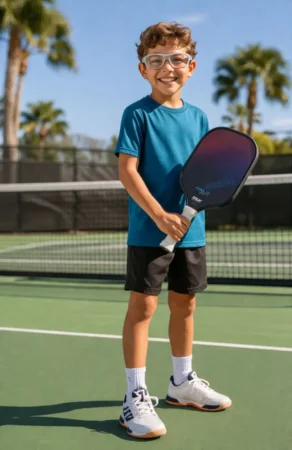
Last spring, a mom from Tarpon Springs reached out to me after watching her nine-year-old struggle to keep up in a rec tennis program. He was athletic and willing, but the court felt too big, the ball moved too fast, and after a few weeks he was losing interest fast. She asked if pickleball might be a better fit. I told her to bring him out to the courts and let’s see what happens.
Within thirty minutes, he was rallying steadily and smiling the whole time. By the end of the session, he was already asking when the next one was. She signed him up for weekly lessons that same afternoon. That is the moment many parents are really looking for.
That kind of story is not unusual in my experience coaching kids across Tampa, Lutz, Brooksville, and Tarpon Springs. Parents often come to me after their child has bounced off a sport that felt too big, too fast, or just plain discouraging. Pickleball tends to meet kids where they are because the court is smaller, the gear is lighter, and the pace gives young players enough time to actually think and react. It removes the intimidation factor that keeps many kids from sticking with a racquet sport.
So what is the best age for kids to start playing pickleball? Here is the honest answer: there is no official starting age. Most children around four or five can grasp the basic idea of holding a paddle and striking a ball. By six to eight, they are ready for structured play with simplified rules. The more important question is not how old your child is. It is whether they are curious and willing to try, and whether the environment makes them feel like they can succeed.
In this guide, I will walk through what to realistically expect at different age groups, how to pick the right equipment without overspending, what pickleball actually does for a child’s development, and how I structure youth instruction across the greater Tampa Bay area so you can decide if this is the right fit for your family right now.
What to Expect at Each Age: A Realistic Guide for Tampa Bay Parents
I tell every parent the same thing before their child’s first session: don’t compare your kid to the one on the next court. Development is not a straight line, and pickleball shows that quickly. I have coached kids who picked up the dinking game at age six and others who needed several months of lessons before they felt confident tracking the ball at age ten. Both outcomes are completely normal.
Here is how I generally see kids progress by age group, based on years of working with young players around Pasco and Hillsborough County.
Ages 4 to 5 — Introduction Only
This is fun-first, fundamentals-second territory. The goal at this age is simple: can they make contact with the ball, and do they enjoy the process? I keep sessions to 20 or 30 minutes and focus entirely on grip, basic stance, and getting short rallies going. I do not introduce scoring or formal rules yet. The win is when a child leaves the court wanting to come back. Everything else can wait.
Ages 6 to 8 — Where Real Learning Begins
This is the age range where structured instruction starts to take hold. Kids at this stage can follow simplified rules, understand basic court boundaries like the kitchen line, and begin building some consistency in their groundstrokes. I run group pickleball lessons regularly at parks in Lutz and Tarpon Springs, and the improvement I see from session one to session four in this age group is genuinely noticeable. A child who could barely get the ball over the net in week one is often sustaining five- and six-shot rallies by week four.
Ages 8 to 10 — Strategy and Light Competition
By eight to ten, most kids are ready to learn how to score, understand positioning, and handle the idea of winning and losing gracefully. This is also when parents in Brooksville and the greater Tampa area start asking about junior leagues. If a child has had six to eight weeks of consistent lessons and feels comfortable with the basics, they are usually ready for that environment. I help families find the right programs based on skill level and temperament, because not every child is ready for competition at the same pace.
Ages 10 to 12 and Beyond — The Competitive Path Opens Up
At this stage, some kids start asking about tournaments on their own. The Pasco and Hillsborough County recreational programs occasionally host youth events, and USA Pickleball sanctions junior tournaments throughout Florida multiple times a year. I have had several students in this age group go on to compete at organized local levels. For kids who want to pursue the sport seriously, this is when private pickleball lessons become especially valuable, because one-on-one feedback accelerates technical development more than group settings alone.
The through-line across every age group is the same: keep it fun, keep it achievable, and let the child set the pace for how serious it gets. Pushing a kid toward competition before they are ready is one of the fastest ways to lose them to the sport entirely.
Getting Your Child the Right Gear Without Overcomplicating It
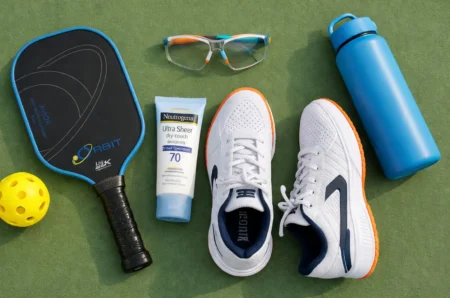
One of the most common mistakes I see parents make is buying adult equipment for a child because it looks more serious, or because they want to avoid replacing gear as the kid grows.
I understand the instinct, but a full-weight adult paddle in small hands does not build confidence. It builds compensation habits, awkward mechanics, and frustration. The right gear for a beginner is simple and appropriately sized, not expensive and impressive.
Paddle Weight and Size
For kids under 8, I recommend paddles in the 6- to 7-ounce range. Lighter paddles let children swing naturally and develop clean mechanics from the start. A heavy paddle forces young players to use their whole bodies to generate force rather than develop proper wrist and arm technique, and those habits are hard to unlearn later.
A good current option is a lightweight, youth-friendly paddle from a reputable brand, such as the newer Franklin Sports lightweight paddle or the Selkirk SLK line, both of which are widely available today and fall within that easy-to-swing weight range. If you saw an older model recommended somewhere online that is now discontinued, one of these comparable current versions will do the same job. At I&G Pickleball, we offer paddle customization and grip fitting so the equipment actually fits the player. Grip circumference matters more than most people realize. A grip that is too large forces the wrist into tension. A grip that is too small gives the child no stability or control. Getting that fit right early makes a measurable difference in how quickly a young player improves through their lessons.
The Ball (Indoor vs. Outdoor)
Indoor balls are softer, lighter, and have larger holes that slow the flight and give young players more time to react. Outdoor balls are harder, heavier, and move faster. For younger kids just starting out in Lutz, Brooksville, or the indoor courts in Tampa, I recommend starting with an indoor ball. The extra reaction time lets kids build consistent rallies, which is what builds the confidence that keeps them coming back.
Footwear
Court shoes with lateral support matter more than most parents expect. Kids who show up in running shoes or worn-out sneakers are working against themselves before they even pick up a paddle. Running shoes are built for forward motion. Pickleball demands constant side-to-side movement. A proper court shoe keeps a child stable, reduces the risk of ankle rolls, and lets them focus on the ball rather than their footing.
Sun Protection for Tampa Bay Courts
Most Tampa Bay courts are outdoor and exposed. Lightweight moisture-wicking clothing, a hat or visor, and sunscreen before every session are non-negotiable for afternoon play in Pasco or Hillsborough County. A child who is overheated or sunburned after their first outdoor lesson is not coming back next weekend.
What You Do Not Need Right Away
Paddle bags, lead tape, and specialty grips are all things that can come much later. A well-fitted starter paddle, the right ball for the setting, and supportive court shoes are enough to carry a young player through their first several months of pickleball lessons. Keep it simple and let the game do the work.
Essential Equipment Parents Often Overlook
Most parents arrive at their child’s first lesson thinking about paddles and shoes. Those things matter, but there is a wider equipment picture I walk every family through before their child starts playing regularly. Some of it is about performance. Some of it is about safety. All of it is worth knowing before you spend a dollar on gear.
Eye Protection — The Most Underrated Item
I am direct with parents about this one: protective eyewear is not optional for kids playing pickleball, and I wish it were talked about more in youth sports circles. A pickleball travels at speeds that can cause real eye injury on a mishit, a deflection off the frame, or a ball coming back unexpectedly from close range at the kitchen line. Adults tend to have faster reflexes and better court awareness. Young players are still developing both.
Sport-specific eyewear designed for racquet sports gives wraparound coverage and impact-resistant lenses rated for court forces. Standard sunglasses do not qualify. They are not built to withstand a direct impact from a ball and can actually cause more damage if the lens shatters. Look for eyewear that meets the ASTM F803 standard, the benchmark for racquet sport eye protection. Several brands now make youth-sized sport goggles that fit well and do not feel bulky. Once a child wears them for a few sessions, they stop noticing them entirely.
Wrist and Elbow Support
Kids are more resilient than adults in many ways, but repetitive motion without proper form can still create strain over time. For children playing multiple times per week, a lightweight wrist support or compression sleeve for the playing arm can reduce the cumulative load on developing tendons. I do not recommend these as a substitute for good technique, but as a supplemental measure for active young players putting in real court time. If a child mentions wrist or elbow soreness after sessions, it’s worth having a conversation with a sports medicine pro before it becomes a recurring issue.
Appropriate Clothing for Court Movement
This may seem obvious, but it comes up more than you would expect. Kids who show up in baggy jeans, sandals, or restrictive clothing are working against their own movement from the start. Athletic shorts or leggings with a full range of motion, a breathable top, and properly fitted socks that prevent blisters inside court shoes are the baseline. For morning sessions at outdoor courts in Tampa or Brooksville, layers that can come off as the temperature rises are practical. For summer afternoons, a cooling towel and extra water are worth adding to the bag.
A Bag That Fits the Child
A dedicated sports bag does not need to be expensive, but having one does matter for organization and habit-building. A simple drawstring bag or small backpack that holds a paddle, a water bottle, a change of socks, sunscreen, and protective eyewear is all a young player needs. When a child can pack their own bag before a session, it builds ownership of the sport, and that sense of responsibility carries over into how seriously they take their lessons.
Hydration Gear for Tampa Bay Heat
Playing pickleball outdoors in the Tampa Bay summer is a different experience than playing indoors or in cooler climates. Kids dehydrate faster than adults and do not always recognize the early signs. An insulated water bottle that keeps water cold for an entire session is worth the investment. For kids playing in afternoon heat at courts in Lutz or along the Tarpon Springs waterfront, I also recommend electrolyte packets or a light sports drink for sessions longer than 45 minutes. Dehydration affects focus and coordination well before a child feels thirsty.
The goal here is not to turn a fun sport into a gear checklist. It is to ensure that when your child shows up at the court, nothing gets in the way of their experience. The right equipment removes friction. It keeps them comfortable, safe, and focused on what matters: learning to play and enjoying the game.
What Pickleball Actually Does for a Child’s Development
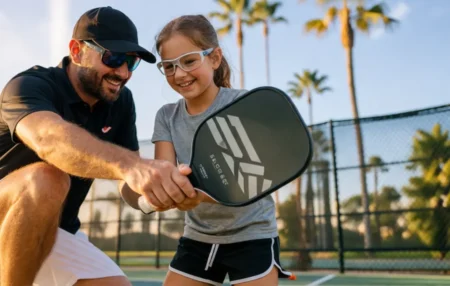
I have coached kids in various sports over the years, and what stands out about pickleball is how quickly it builds skills that carry into other areas of a child’s life. It is not just a fun way to fill an afternoon. It is genuinely useful for physical development, social growth, and mental engagement in ways parents often do not expect.
Hand-Eye Coordination
The pace of pickleball is fast enough to be challenging but slow enough that kids can develop real timing. The ball sits in the strike zone long enough for a young player to read its path, adjust their position, and make clean contact. I see measurable improvement in hand-eye coordination within the first four to six weeks of consistent youth pickleball lessons, even in kids who struggled a lot with other racquet sports.
Footwork and Agility
The compact court forces efficient movement rather than just running hard. Kids learn to position themselves, recover to the center, and read where the ball is going before it arrives. Those movement patterns carry over directly to basketball courts, soccer fields, the Lutz Little League diamonds, and Tarpon Springs recreational programs, where many of my students also play.
Focus and Decision-Making
Every point in pickleball requires a sequence of small decisions: when to dink, when to attack, when to hold position at the kitchen. For kids ages eight and up, that mental load is genuinely useful. It builds the ability to stay present under pressure, read a situation, and choose a response rather than just reacting. Multiple parents have told me their children became noticeably more focused in school and other activities after several months of structured coaching.
Social Skills and Sportsmanship
Doubles play is the default format in pickleball, which means kids communicate with a partner, share responsibility for outcomes, and practice handling both wins and losses without letting either define the session. I build sportsmanship work into every group session I run, whether at a court in South Tampa or a community gym in Brooksville. Learning to compete without it becoming personal is a skill that pays off well beyond the court.
Low Injury Risk
The court is small, the ball is plastic and lightweight, and the movements are far less jarring than football, basketball, or even tennis. For parents who have watched a child sit out an entire season with a sports injury, that matters a great deal. Pickleball is one of the few competitive sports a child can play consistently year-round in the Tampa Bay climate without piling significant wear on developing joints.
For kids who are still figuring out which sport feels right, pickleball often becomes the anchor activity that holds their interest long enough for them to build real skill and confidence. It is approachable enough that any child can start, and deep enough that competitive kids find plenty to work toward for years.
Ready to Get Your Child Started? Here’s How to Take the Next Step
If anything in this guide spoke to you, the simplest next step is to book a single introductory lesson and see how your child responds. No long-term commitment is required. I work with kids across Tampa, Lutz, Tarpon Springs, and Brooksville, and I offer private lessons, semi-private sessions, and small-group formats depending on what fits your child’s personality and your family’s schedule. You can learn more about our youth pickleball lessons and how each format works before you decide.
Video pickleball lessons are also available for families who want to build a foundation at home before stepping onto a court, or for players who want to review technique and get feedback between in-person sessions.
Ready to book or have a question? Contact Coach Igor here to schedule your child’s first session and get started.
Frequently Asked Questions
My child is only five. Is that too young for structured pickleball lessons?
Not necessarily. At five, the focus stays entirely on fun and basic motor skills rather than rules or scoring. Short sessions built around rallying and movement work well at that age. I have worked with children as young as 4 in the Tampa Bay area, and the key is to keep expectations age-appropriate and the atmosphere completely relaxed. There is no pressure, no scorekeeping, and no comparison to other kids.
Do I need to buy equipment before the first lesson?
No. For an introductory session, I can provide a loaner paddle so your child can try the sport before you invest in anything. If they enjoy it and want to continue, I will give you specific recommendations based on their hand size, strength level, and playing style. Paddle customization and grip fitting are things I help families with regularly through I&G Pickleball, and I always base suggestions on how the child actually plays rather than what is popular online.
How many lessons does my child need before they see real improvement?
Most young players show noticeable improvement within four to six weeks of consistent lessons. In the six-to-eight age group, I often watch a child go from barely clearing the net in week one to sustaining five- and six-shot rallies by week four. Progress depends on how often they play, their age, and how comfortable they feel on the court, but steady weekly practice is what really moves the needle. Confidence usually grows right alongside the skill.
Are there youth pickleball tournaments in the Tampa Bay area my child could eventually join?
Yes. Pasco and Hillsborough County recreational programs periodically host youth events, and USA Pickleball sanctions junior tournaments throughout Florida several times per year. Once a child has completed several months of consistent lessons and feels comfortable in competitive situations, I help families identify the right entry-level events for their child. The goal is always to find competition that challenges the child without overwhelming them.
Picture Source: AI-generated
