



Pickleball has evolved a lot over the last few years. What was once seen as mostly a recreational activity now attracts highly competitive athletes of all ages. In their quest to improve their game, many players are finding that winning on the court is about more than just hitting serves, dinks, and volleys. Weight training is one of the most effective ways to improve overall pickleball performance, and physical conditioning is increasingly important in player development.
In our coaching programs, we talk a lot about the relationship between strength, movement, injury prevention, and stamina. Skill development is still important; however, players who incorporate strength training into their weekly regimen often see benefits in their court coverage, shot consistency, balance, and recovery. Today’s game of pickleball requires more physical fitness than most people realize, so weight training can be a beneficial addition to a complete training program.
Why Strength Matters in Pickleball
Pickleball involves repetitive acceleration, deceleration, side-to-side movement, and rapid changes in direction. Players constantly move forward, backward, and side to side all while remaining balanced and controlled. These moves depend heavily on lower-body strength, core stability, and overall muscular endurance.
When competition heats up, players often discover that technical skills may not be adequate to sustain consistency throughout long matches or tournament play. Strength training builds the physical base necessary for efficient movement patterns and lasting performance.
Increased strength can also lead to improved posture and better body control, which directly impacts stroke mechanics and shot execution.
Generating Controlled Power
Many players think of power only in terms of upper-body strength. Good power generation actually starts with the legs and core. Strong lower-body muscles help transfer energy through the kinetic chain, allowing players to hit drives, serves, and overheads more efficiently while maintaining control.
Improving Balance and Stability
Balance is a giant part of being successful in pickleball. Players need stability to hit shots well, whether they are trying to get to a wide dink, recover from a quick exchange, or hold their position in a rally.
Core, hip, and lower-body weight-training exercises can improve balance and coordination. With single-leg exercises, controlled resistance movements, and functional strength training, players develop body awareness that directly translates to on-court performance.
Supporting Kitchen Line Play
The non-volley zone is often the heartbeat of competitive pickleball. Speedy trades on the kitchen line require quick reactions and precise positioning. Generally, the guys with better legs and greater stability are better at staying composed in these tough situations.
Reducing Injury Risk
One of the most important ways to prevent injury is through weight training. Pickleball participation is growing across all age groups, including many adults with minimal athletic training.
Strength training helps support the joints, tendons, and muscles that are repeatedly stressed during play. Stronger muscles help you absorb forces better and move more efficiently. This can reduce the risk of certain overuse injuries common in pickleball.
Current studies on athletic performance still indicate that resistance training is important for maintaining mobility, muscle mass, and overall physical function as people age.
Recovery and Longevity
Recovery often becomes more important for regular players. Strength training can aid recovery by enhancing muscle strength and overall physical fitness. With regular training, players can stay in the game longer.
Developing a Balanced Training Program
Weight training should complement pickleball practice, not replace it. An all-around approach will often include skill development, cardio conditioning, flexibility work, mobility work, and strength training.
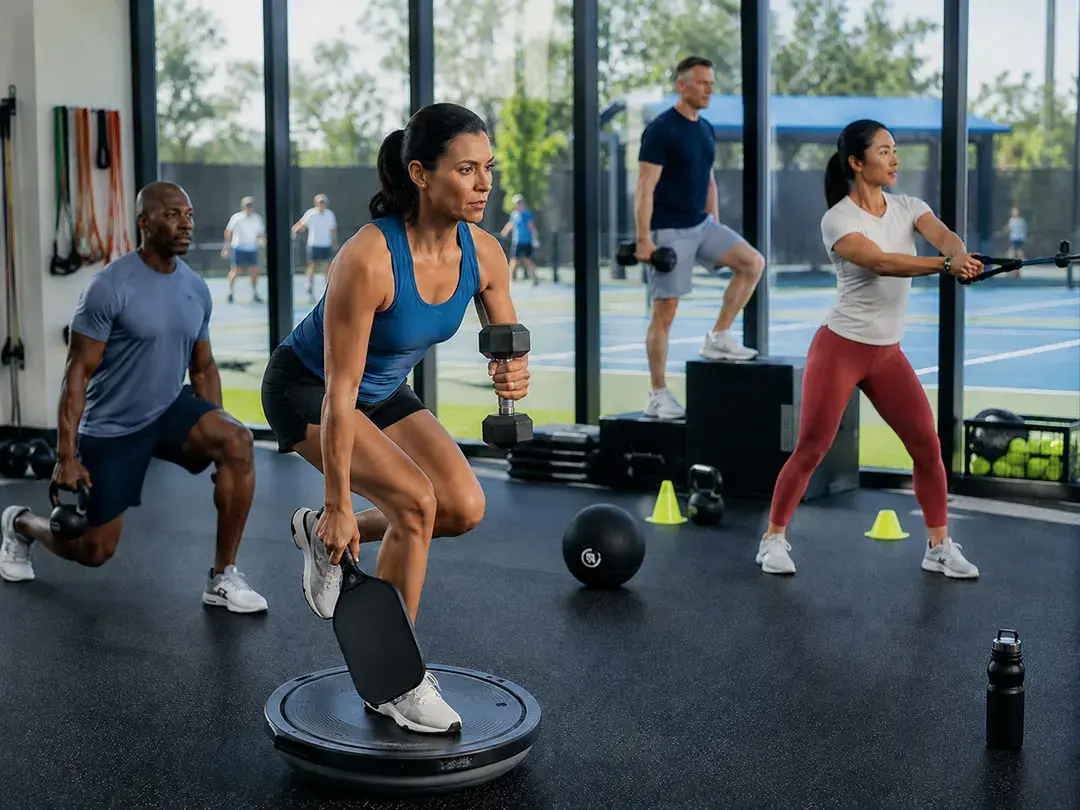
Functional movement pattern-based exercises are especially helpful for the pickleball player. Squats, lunges, rows, presses, core rotational exercises, and balance-based movements all help build strength that directly translates to on-court performance.
The aim isn’t necessarily to build maximum muscle mass. Nevertheless, most pickleball players will benefit from developing strength that improves movement efficiency, stability, endurance, and overall athleticism.
Frequently Asked Questions
Does weight training help improve pickleball performance?
Yes. Weight training can improve strength, balance, stability, endurance, and movement efficiency, all of which contribute to better pickleball performance.
How often should pickleball players perform strength training?
Many players benefit from two to three strength training sessions per week, depending on their experience level, age, and overall fitness goals.
Can weight training help prevent pickleball injuries?
Strength training may help reduce injury risk by supporting muscles, joints, and connective tissues while improving overall movement mechanics.
Is weight training beneficial for older pickleball players?
Yes. Resistance training can help maintain muscle mass, improve balance, support mobility, and contribute to overall physical health for players of all ages.
Building a Stronger Foundation for Success
As pickleball continues to grow, players are recognizing the value of physical preparation alongside technical skill development. Weight training provides benefits that extend beyond power alone. Improved balance, stability, endurance, recovery, and injury resistance can all contribute to more consistent performance on the court. Players who combine quality instruction with a thoughtful strength training program often develop a stronger foundation for continued improvement and enjoyment of the game.
Contact Us Today
Whether you are new to pickleball or looking to elevate your competitive performance, we are here to help. Our coaching programs focus on skill development, strategy, movement, and overall player improvement. Contact us today to learn more about our lessons, clinics, and training opportunities designed to help you play your best pickleball.
Picture Source: AI-generated
